Loading Go-LX...
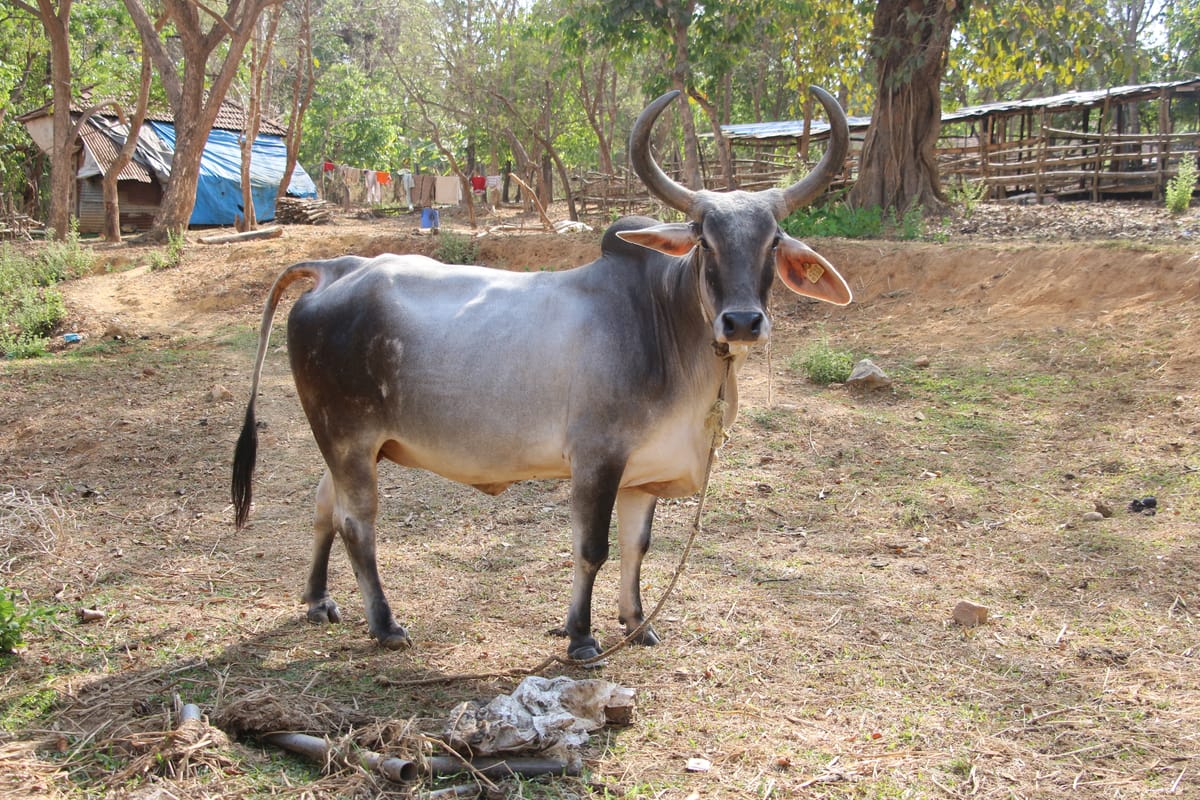
View Full Image
संवेदनशील Gujarat A2 दूध
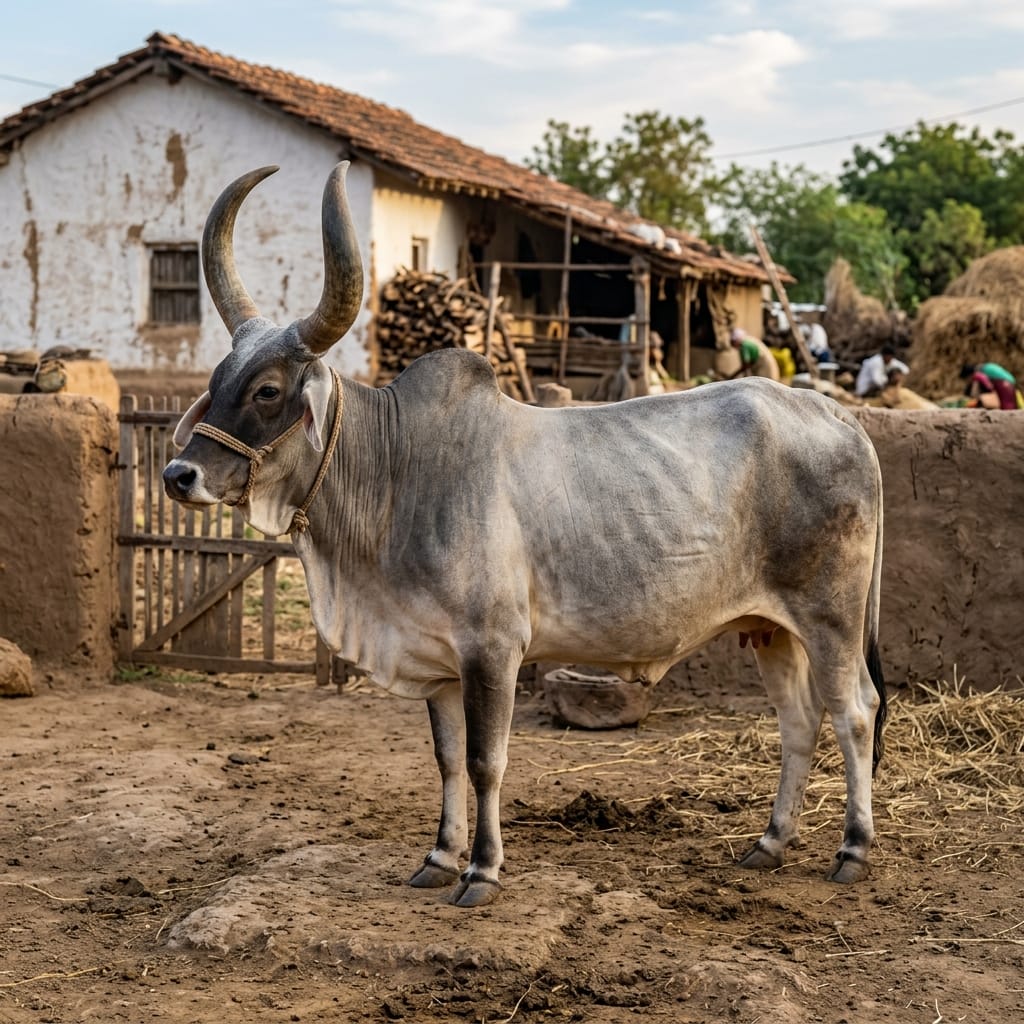
Kankrej गाय
કાંકરેજ
इतर नावे: Wagad, Wadhiar, Talabda, Nagar
गुजरातच्या ओसाड भूमीची उंच-कद दूध-कर्षण जात.
मूळ प्रदेश: कच्छ, बनासकांठा, मेहसाणा, पाटण; राजस्थानच्या बाडमेर आणि जोधपूरपर्यंत
Photo: Wikimedia Commons contributors · CC BY-SA
दैनिक दूध (कमाल)
6–10 L
प्रति वेताळ दूध (~300 दिवस)
1,300–2,800 L
दूध चरबी
4.0–4.8%
प्रौढ वजन
400–500 kg
विशिष्ट वैशिष्ट्ये
रोम/त्वचा: चांदी-राखाडी ते लोखंडी-राखाडी; नर गायींपेक्षा गडद.
- शक्तिशाली, चांगले मांसल शरीर — स्वदेशी भारतीय दुहेरी-उद्देशीय जातींमधील सर्वात मोठी
- त्वचेने अर्ध्यापर्यंत झाकलेले लायर-आकाराचे शिंगे
- मजबूतपणे विकसित कुबड
- स्थिर, जमिनीला झाकणारी चाल (सवाई-चाल) — वेगाने दीर्घ अंतर पार करण्यासाठी प्रसिद्ध
स्वभाव आणि उपयोग
- प्रमुख कर्षण जात — बैल जड गाड्या निरंतर वेगाने खेचतात
- दुहेरी-उद्देशीय प्रजननानंतरही गायी सन्माननीय दूध देतात
- उष्णता आणि दुष्काळ सहनशील
- दीर्घ उत्पादक जीवन — 12+ लॅक्टेशन असामान्य नाही
इतिहास आणि वंशावळ
कांकरेजचे नाव बनासकांठाच्या कांकरेज तालुक्यावरून पडले. ही जात ऐतिहासिकदृष्ट्या गुजरात आणि राजस्थानच्या व्यापारी काफिल्यांचा केंद्रबिंदू होती — कांकरेज बैलगाड्या कापूस, मीठ आणि धान्य 8–10 किमी/तासाने नेत. यांत्रिकीकरणामुळे कर्षण बाजार कोसळला; आज कांकरेज प्रामुख्याने गोशाळा आणि गुजरात पशुपालन विभागाद्वारे सांभाळल्या जाणाऱ्या दुहेरी-उद्देशीय जातीच्या रूपात टिकून आहे.
Kankrej का महत्त्वाची आहे
कांकरेज दुहेरी-उद्देशीय जात आहे — शेतीवर काम करणारी कांकरेज गाय मूलत: एका शेतावर दोन उत्पन्न प्रवाह देते. कोरड्या गुजरात/राजस्थानसाठी सहनशीलता आणि कठोरता तिला अव्वल निवड बनवते.
Kankrej cow price in India
Typical milking cow
₹50,000 – 1,10,000
Healthy, regular yield
Elite / registered lines
₹1,80,000 – 5,00,000
High yield, pedigreed
Kankrej is a dual-purpose breed — bullocks command serious premiums in north Gujarat and Rajasthan farming circuits. A good Kankrej bullock pair can cost more than a milking cow.
Monthly maintenance cost
Feed
₹4,000 – 6,000
Vet + vax
₹400 – 900
Approx. total
₹5,000 – 7,500
Kankrej is a large-framed breed (450–550 kg) so feed cost runs higher than Gir or Red Sindhi. Field grazing in the Banaskantha-Kachchh belt offsets this for traditional owners.
A2 milk
Is Kankrej cow milk A2?
Yes. Kankrej produces A2 beta-casein milk by genetics — like all pure indigenous Indian (Bos indicus) breeds.
- A2 milk with 4.5–5.0% fat — typical zebu profile.
- Strong draught capability means a working Kankrej cow on a farm is essentially two income streams in one.
- Disease and drought tolerance make it a top pick for arid Gujarat / Rajasthan.
- Milk yield is lower than Gir/Sahiwal but bullock value compensates economically.
How to verify
Visual cues: silver-grey to iron-grey coat, distinctive lyre-shaped horns rising upward from a broad forehead, large dewlap. Pure Kankrej has a confident, alert gait — the breed was traditionally used by the Banni nomads to pull heavy carts across desert sand.
Kankrej vaccination schedule
Standard DAHD / ICAR schedule for indigenous Indian dairy cattle. Always confirm timing with your local vet.
| First dose | Vaccine | Cadence |
|---|---|---|
Compare Breeds
Select any two indigenous breeds to compare side-by-side.
| Feature | Kankrej | Gir |
|---|---|---|
| Origin | Gujarat | Gujarat |
| Daily Milk Yield | 6–10 L | 8–12 L |
| Lactation Yield | 1,300–2,800 L | 1,800–3,500 L |
| Milk Fat % | 4.0–4.8% | 4.5–5.0% |
| Adult Weight | 400–500 kg | 380–475 kg |
| Status | Vulnerable | Stable |
| Coat Color | चांदी-राखाडी ते लोखंडी-राखाडी; नर गायींपेक्षा गडद. | चमकदार लाल किंवा लाल-पांढरा ठिपकेदार; कधीकधी शुद्ध पांढरा. लाल-पिवळ्या रंगाचे मुख. |
| Milking Price | ₹50,000 – 1,10,000 | ₹50,000 – 1,20,000 |
| Maintenance | ₹5,000 – 7,500/mo | ₹4,500 – 7,000/mo |