Loading Go-LX...
View Full Image
स्थिर Rajasthan A2 दूध
Tharparkar गाय
थारपारकर
इतर नावे: White Sindhi, Grey Sindhi, Thari
थार वाळवंटाची दूध देणारी श्वेत-धूसर सहनशील जात.
मूळ प्रदेश: थार वाळवंट — बाडमेर, जैसलमेर, जोधपूर, श्री गंगानगर
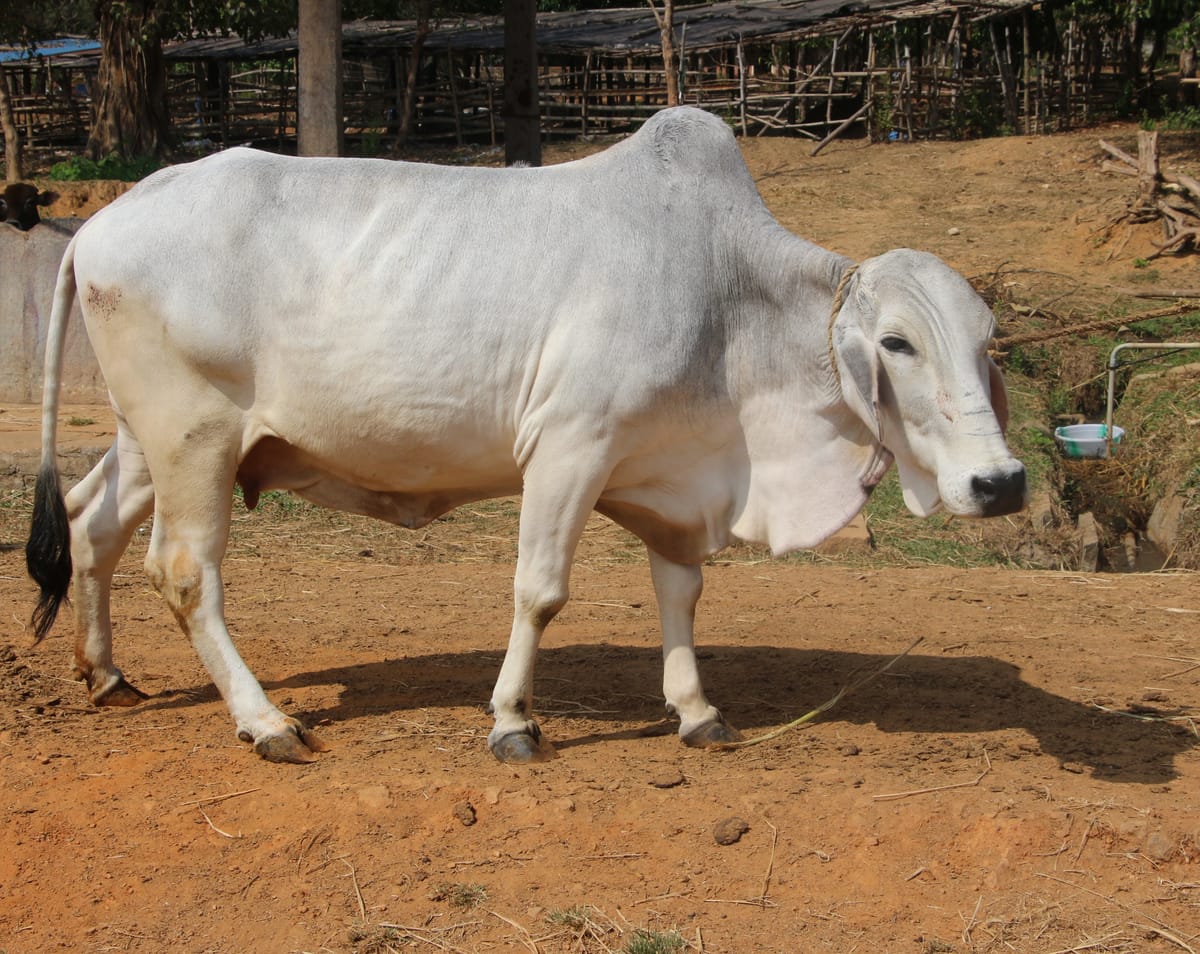
Photo: Wikimedia Commons contributors · CC BY-SA
दैनिक दूध (कमाल)
7–10 L
प्रति वेताळ दूध (~300 दिवस)
1,400–3,000 L
दूध चरबी
4.5–5.0%
प्रौढ वजन
350–450 kg
विशिष्ट वैशिष्ट्ये
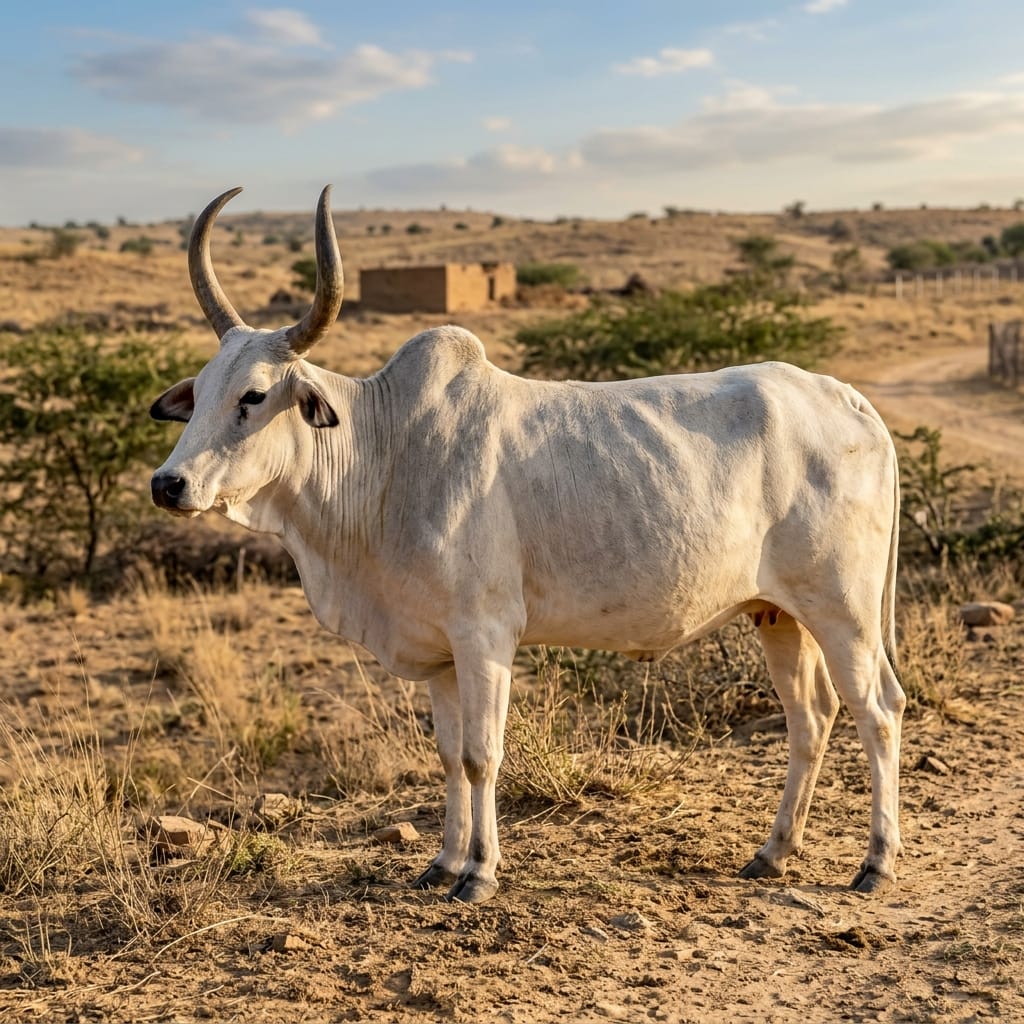
रोम/त्वचा: पांढरा ते राखाडी; नर अधिक गडद.
- मध्यम आकार, संतुलित शरीर
- लहान, सरळ शिंगे
- खोल बॅरल, चांगली विकसित कुबड
- रुंद कास, मध्यम लांब स्तनाग्र
स्वभाव आणि उपयोग
- भारतातील सर्वात पाणी-कार्यक्षम डेअरी जात
- A2 दूध, चांगली चरबी सामग्री
- मॅस्टिटिसविरुद्ध मजबूत प्रतिकार
- दुष्काळ-सहनशील; कमी चाऱ्यावर बहरते
इतिहास आणि वंशावळ
थारपारकर भारत-पाकिस्तान सीमेच्या थार वाळवंटातून येते. ही जात पिढ्यानपिढ्या पशुपालक समुदायांनी कमी पाऊस आणि कठोर परिस्थितीत टिकून राहण्यासाठी निवडली. NBAGR तिला राजस्थानची प्रमुख दुधाळ जात म्हणून वर्गीकृत करते.
Tharparkar का महत्त्वाची आहे
थारपारकर भारतातील सर्वात पाणी-कार्यक्षम डेअरी जात आहे — वाळवंटासाठी डिझाइन केलेली. कोरड्या प्रदेशांत जिथे इतर जाती अयशस्वी होतात तिथे थारपारकर बहरते, मर्यादित संसाधनांवरही वारसा डेअरी जपते.
Tharparkar cow price in India
Typical milking cow
₹45,000 – 1,00,000
Healthy, regular yield
Elite / registered lines
₹2,00,000 – 6,00,000
High yield, pedigreed
Tharparkar is undervalued relative to Gir/Sahiwal despite comparable yields — buy from Rajasthan breeders directly to skip middleman margins. Drought-belt provenance matters: cows from the Thar tract command a premium.
Monthly maintenance cost
Feed
₹3,000 – 5,000
Vet + vax
₹400 – 800
Approx. total
₹4,000 – 6,500
Tharparkar is the most water-efficient milking breed in India — designed for the desert. Maintenance cost drops sharply on dry-fodder + tree-leaf rations that would starve a HF.
A2 milk
Is Tharparkar cow milk A2?
Yes. Tharparkar produces A2 beta-casein milk by genetics — like all pure indigenous Indian (Bos indicus) breeds.
- A2 milk with 4.5–5.2% fat — comparable to Gir and Sahiwal.
- Lower somatic cell count than crossbreds because of strong mastitis resistance.
- Milk holds quality longer at room temperature — a real advantage in off-grid pastoral areas.
- A natural fit for India's A2 specialty market because the breed thrives without intensive infrastructure.
How to verify
Tharparkar is pure zebu — A2 by default. Verify pure-breed status visually: medium build, white-to-grey coat, lyre-shaped horns, deep barrel. Cross-checking with the seller's village against the Tharparkar tract (Barmer, Jaisalmer, Jodhpur, Sri Ganganagar) is the quickest authenticity screen.
Tharparkar vaccination schedule
Standard DAHD / ICAR schedule for indigenous Indian dairy cattle. Always confirm timing with your local vet.
| First dose | Vaccine | Cadence |
|---|
Compare Breeds
Select any two indigenous breeds to compare side-by-side.
| Feature | Tharparkar | Gir |
|---|---|---|
| Origin | Rajasthan | Gujarat |
| Daily Milk Yield | 7–10 L | 8–12 L |
| Lactation Yield | 1,400–3,000 L | 1,800–3,500 L |
| Milk Fat % | 4.5–5.0% | 4.5–5.0% |
| Adult Weight | 350–450 kg | 380–475 kg |
| Status | Stable | Stable |
| Coat Color | पांढरा ते राखाडी; नर अधिक गडद. | चमकदार लाल किंवा लाल-पांढरा ठिपकेदार; कधीकधी शुद्ध पांढरा. लाल-पिवळ्या रंगाचे मुख. |
| Milking Price | ₹45,000 – 1,00,000 | ₹50,000 – 1,20,000 |
| Maintenance | ₹4,000 – 6,500/mo | ₹4,500 – 7,000/mo |