Loading Go-LX...
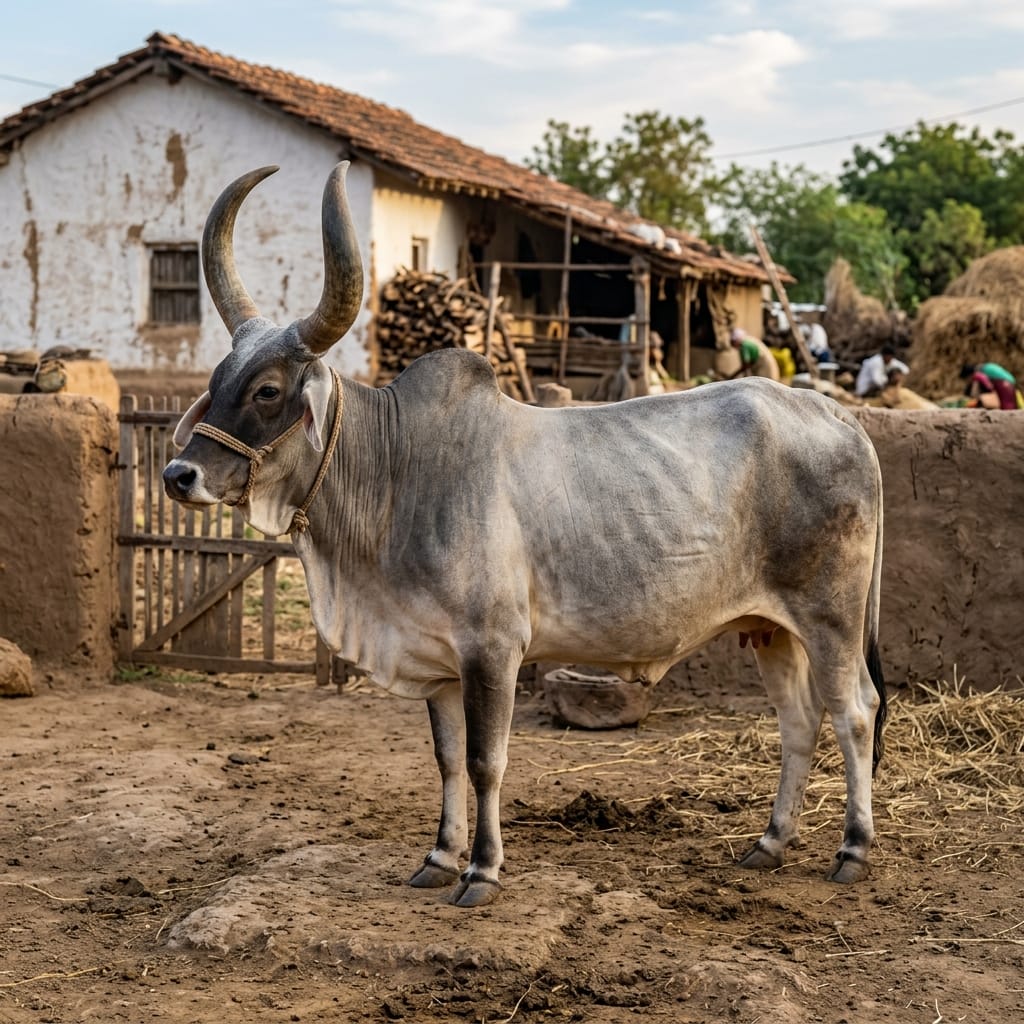
View Full Image
பாதிக்கப்படக்கூடிய Gujarat A2 பால்
Kankrej பசு
કાંકરેજ
மற்றும் அழைக்கப்படுகிறது: Wagad, Wadhiar, Talabda, Nagar
குஜராத்தின் தரிசு நிலத்தின் உயரமான பால்-இழுவை இனம்.
தாயக மண்டலம்: கச்ச், பனாஸ்காந்தா, மெஹ்சானா, பாட்டன்; ராஜஸ்தானின் பார்மர் மற்றும் ஜோத்பூர் வரை
Photo: Wikimedia Commons contributors · CC BY-SA
தினசரி பால் (உச்சம்)
6–10 L
ஒரு பால் சுரப்பு (~300 நாட்கள்)
1,300–2,800 L
பால் கொழுப்பு
4.0–4.8%
வயதான எடை
400–500 kg
தனித்துவ அம்சங்கள்
தோல்/ரோமம்: வெள்ளி-சாம்பல் முதல் இரும்பு-சாம்பல்; ஆண்கள் பசுக்களை விட அடர்த்தியாக.
- சக்திவாய்ந்த, நன்கு தசை நிறைந்த உடல் — சொந்த இனப் இந்திய இரட்டை-நோக்க இனங்களில் மிகப்பெரியது
- தோலால் பாதி வரை மூடப்பட்ட லைர் வடிவ கொம்புகள்
- வலுவாக வளர்ந்த கூம்பு
- நிலையான, தரையை மறைக்கும் நடை (சவாய்-சால்) — விரைவாக நீண்ட தூரம் கடப்பதற்கு அறியப்படுகிறது
குணம் மற்றும் பயன்பாடு
- முதன்மை இழுவை இனம் — காளைகள் கனரக வண்டிகளை நிலையான வேகத்தில் இழுக்கின்றன
- இரட்டை-நோக்க இனப்பெருக்கம் இருந்தபோதிலும் பசுக்கள் மரியாதைக்குரிய பாலைத் தருகின்றன
- வெப்பம் மற்றும் வறட்சி தாங்கும்
- நீண்ட உற்பத்திக் காலம் — 12+ கறப்புகள் அசாதாரணம் அல்ல
வரலாறு மற்றும் வம்சாவளி
காங்கரெஜ் என்ற பெயர் பனாஸ்காந்தாவின் காங்கரெஜ் தாலுகாவிலிருந்து வருகிறது. இந்த இனம் வரலாற்று ரீதியாக குஜராத் மற்றும் ராஜஸ்தானின் வணிக கூட்டத்தின் மையமாக இருந்தது — காங்கரெஜ் காளை வண்டிகள் பருத்தி, உப்பு மற்றும் தானியங்களை 8–10 கிமீ/மணிக்கு கொண்டு சென்றன. இயந்திரமயமாக்கலுடன், இழுவை சந்தை வீழ்ந்தது; இன்று காங்கரெஜ் முக்கியமாக கோசாலைகள் மற்றும் குஜராத் கால்நடை வளர்ப்பு துறையால் பராமரிக்கப்படும் இரட்டை-நோக்க இனமாக உயிர் வாழ்கிறது.
Kankrej ஏன் முக்கியம்
காங்கரெஜ் ஒரு இரட்டை-நோக்க இனம் — விவசாயத்தில் வேலை செய்யும் காங்கரெஜ் பசு அடிப்படையில் ஒரு பண்ணையில் இரண்டு வருமான ஓட்டங்களை வழங்குகிறது. வறண்ட குஜராத்/ராஜஸ்தானுக்கு தாங்கும் தன்மை மற்றும் கடினத்தன்மை இதை சிறந்த தேர்வாக ஆக்குகிறது.
Kankrej cow price in India
Typical milking cow
₹50,000 – 1,10,000
Healthy, regular yield
Elite / registered lines
₹1,80,000 – 5,00,000
High yield, pedigreed
Kankrej is a dual-purpose breed — bullocks command serious premiums in north Gujarat and Rajasthan farming circuits. A good Kankrej bullock pair can cost more than a milking cow.
Monthly maintenance cost
Feed
₹4,000 – 6,000
Vet + vax
₹400 – 900
Approx. total
₹5,000 – 7,500
Kankrej is a large-framed breed (450–550 kg) so feed cost runs higher than Gir or Red Sindhi. Field grazing in the Banaskantha-Kachchh belt offsets this for traditional owners.
A2 milk
Is Kankrej cow milk A2?
Yes. Kankrej produces A2 beta-casein milk by genetics — like all pure indigenous Indian (Bos indicus) breeds.
- A2 milk with 4.5–5.0% fat — typical zebu profile.
- Strong draught capability means a working Kankrej cow on a farm is essentially two income streams in one.
- Disease and drought tolerance make it a top pick for arid Gujarat / Rajasthan.
- Milk yield is lower than Gir/Sahiwal but bullock value compensates economically.
How to verify
Visual cues: silver-grey to iron-grey coat, distinctive lyre-shaped horns rising upward from a broad forehead, large dewlap. Pure Kankrej has a confident, alert gait — the breed was traditionally used by the Banni nomads to pull heavy carts across desert sand.
Kankrej vaccination schedule
Standard DAHD / ICAR schedule for indigenous Indian dairy cattle. Always confirm timing with your local vet.
| First dose | Vaccine | Cadence |
|---|---|---|
Compare Breeds
Select any two indigenous breeds to compare side-by-side.
| Feature | Kankrej | Gir |
|---|---|---|
| Origin | Gujarat | Gujarat |
| Daily Milk Yield | 6–10 L | 8–12 L |
| Lactation Yield | 1,300–2,800 L | 1,800–3,500 L |
| Milk Fat % | 4.0–4.8% | 4.5–5.0% |
| Adult Weight | 400–500 kg | 380–475 kg |
| Status | Vulnerable | Stable |
| Coat Color | வெள்ளி-சாம்பல் முதல் இரும்பு-சாம்பல்; ஆண்கள் பசுக்களை விட அடர்த்தியாக. | பளபளப்பான சிவப்பு அல்லது சிவப்பு-வெள்ளை புள்ளியுள்ள; சில நேரம் தூய வெள்ளை. சிவப்பு-மஞ்சள் முகம். |
| Milking Price | ₹50,000 – 1,10,000 | ₹50,000 – 1,20,000 |
| Maintenance | ₹5,000 – 7,500/mo | ₹4,500 – 7,000/mo |