Loading Go-LX...
View Full Image
நிலையான Andhra Pradesh A2 பால்
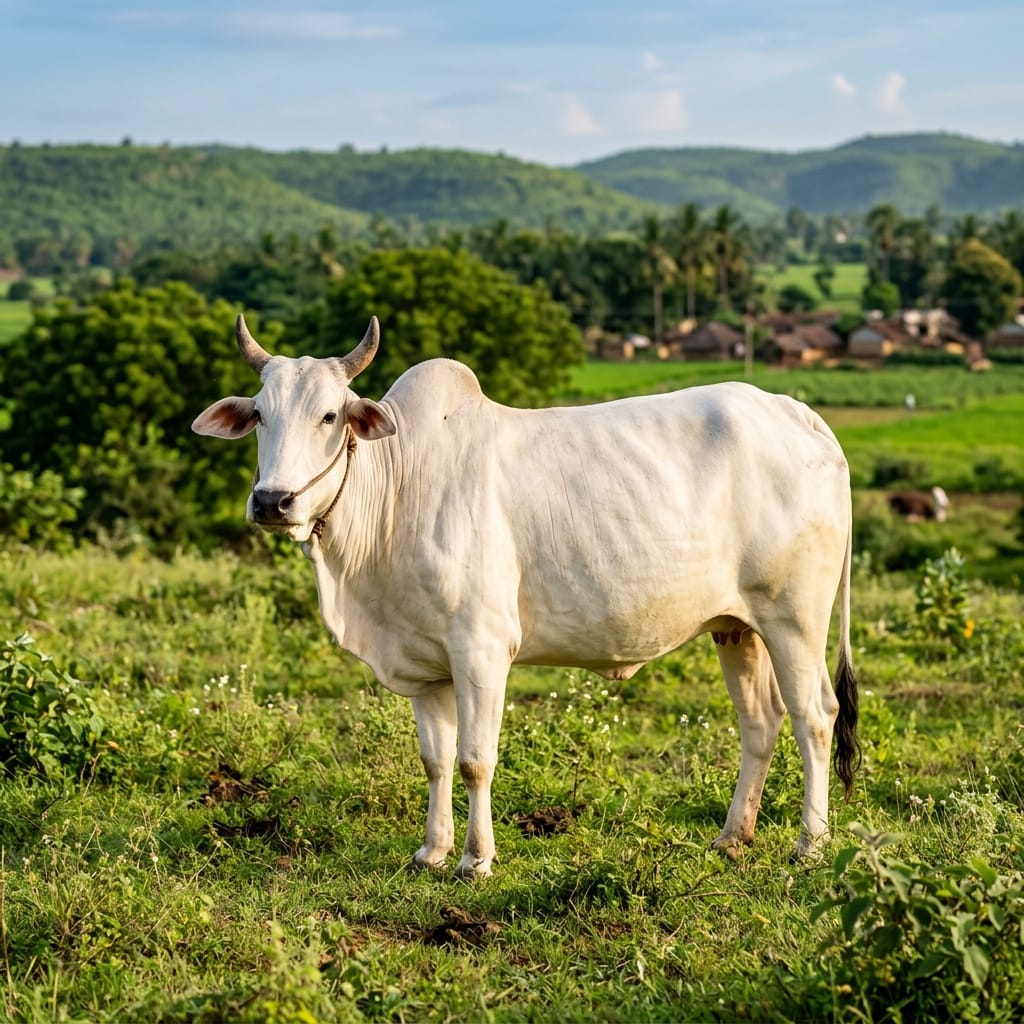
Ongole பசு
ఒంగోలు
மற்றும் அழைக்கப்படுகிறது: Nellore (in Brazil)
எந்த இனத்தின் மீது பிரேசில் தனது மாட்டிறைச்சித் தொழிலைக் கட்டியதோ.
தாயக மண்டலம்: பிரகாஷம், நெல்லூர், குண்டூர்
Photo: Wikimedia Commons contributors · CC BY-SA
தினசரி பால் (உச்சம்)
4–7 L
ஒரு பால் சுரப்பு (~300 நாட்கள்)
1,000–1,800 L
பால் கொழுப்பு
4.5–5.0%
வயதான எடை
430–550 kg
தனித்துவ அம்சங்கள்
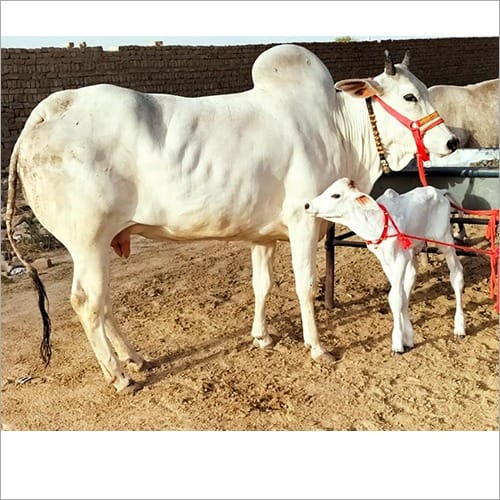
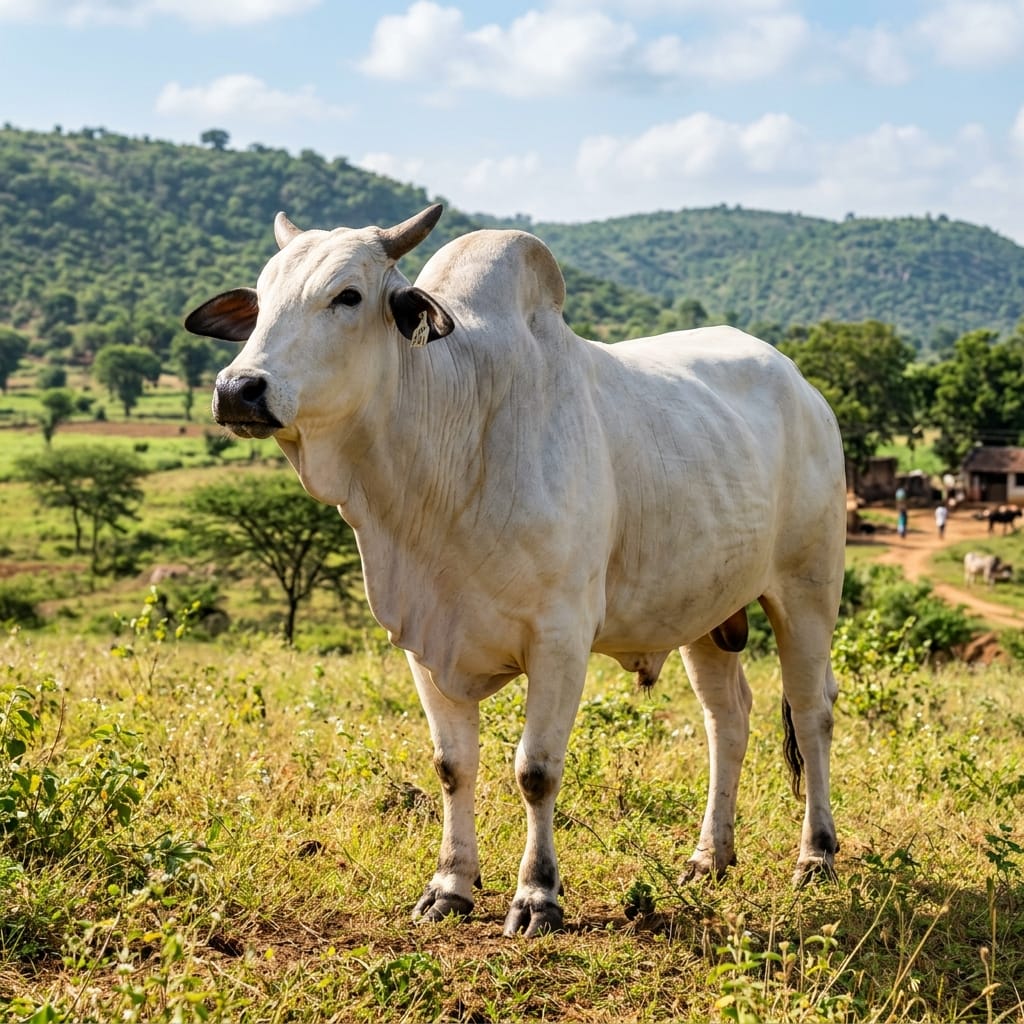
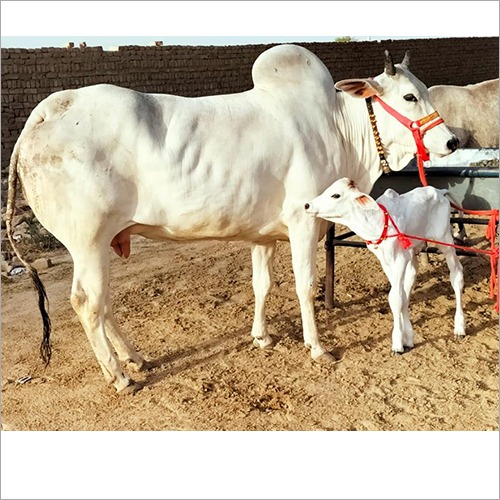
தோல்/ரோமம்: வெள்ளை அல்லது வெளிர் சாம்பல்; கருப்பு புள்ளிகள் (முழங்கால், கழுத்து, தோள்).
- பெரிய, நன்கு தசை கொண்ட உடல் — மிக கனமான இந்திய நாட்டு இனங்களில் ஒன்று
- குட்டையான திடமான கொம்புகள்
- ஆண்களில் பெரிய கூம்பு மற்றும் கழுத்துத் தொங்கல்
- கருப்பு முடியுடன் நீண்ட, ஆட்டும் வால்
குணம் மற்றும் பயன்பாடு
- முதன்மை உழைப்பு மற்றும் மாட்டிறைச்சி-வகை நாட்டு இனம்
- மிதமான பால்; பசுக்கள் நாளுக்கு 4-7 லிட்டர் தருகின்றன
- நோய் எதிர்ப்பு, குறிப்பாக கால் வாய் நோய்க்கு
- நீண்ட உற்பத்தித்திறன் வாழ்க்கை
வரலாறு மற்றும் வம்சாவளி
ஒங்கோல் 1800-களின் பிற்பகுதியில் பிரேசிலுக்கு ஏற்றுமதி செய்யப்பட்டது, அங்கு அது "நெலோர்" ஆனது மற்றும் இப்போது 20 கோடி கால்நடைகள் கொண்டது — பிரேசிலிய மாட்டிறைச்சியின் அடித்தளம். இந்தியாவில், சுதந்திரத்திற்குப் பிறகு உழைப்பு தேவை குறைந்ததால் இனம் குறைந்தது. ஆந்திர பிரதேசத்தின் லாம், குண்டூரில் கால்நடை ஆராய்ச்சி நிலையம் கருவூர் மந்தையை பராமரிக்கிறது. ஒரு உயரிய ஒங்கோல் காளை பிரேசிலிய வாங்குபவர்களிடமிருந்து ₹50 லட்சம்+ பெறலாம்.
Ongole ஏன் முக்கியம்
ஓங்கோல் இந்திய மரபியல் உலகளாவியது என்பதை நினைவூட்டுகிறது. பிரேசிலின் 80% மாட்டிறைச்சி இனங்கள் ஓங்கோல் வம்சத்திலிருந்து வருகின்றன — இருப்பினும் ஆந்திர பிரதேசத்தில் மக்கள் தொகை குறைந்து வருகிறது.
Ongole cow price in India
Typical milking cow
₹40,000 – 90,000
Healthy, regular yield
Elite / registered lines
₹1,50,000 – 3,00,000
High yield, pedigreed
Prices depend heavily on lactation stage, milk yield, and breed purity. Elite lines with verified pedigrees fetch premium rates.
Monthly maintenance cost
Feed
₹3,000 – 4,500
Vet + vax
₹300 – 600
Approx. total
₹3,800 – 5,500
Indigenous zebu breeds are extremely hardy with natural resistance to tropical diseases and ticks, keeping vet bills to a minimum. Feed cost can be reduced with open grazing access.
A2 milk
Is Ongole cow milk A2?
Yes. Ongole produces A2 beta-casein milk by genetics — like all pure indigenous Indian (Bos indicus) breeds.
- Naturally easier to digest for people sensitive to A1 milk
- High in A2 beta-casein protein, free from BCM-7 peptide
- Associated with traditional wellness and higher fat content in native milk
How to verify
Always buy from verified breeders, check the physical traits (prominent hump, dewlap, convex forehead), or request a DNA test report from a certified lab.
Ongole vaccination schedule
Standard DAHD / ICAR schedule for indigenous Indian dairy cattle. Always confirm timing with your local vet.
| First dose | Vaccine | Cadence |
|---|---|---|
| 4 months onwards | FMD (Foot & Mouth Disease) | Every 6 months |
| 6 months onwards |
Compare Breeds
Select any two indigenous breeds to compare side-by-side.
| Feature | Ongole | Gir |
|---|---|---|
| Origin | Andhra Pradesh | Gujarat |
| Daily Milk Yield | 4–7 L | 8–12 L |
| Lactation Yield | 1,000–1,800 L | 1,800–3,500 L |
| Milk Fat % | 4.5–5.0% | 4.5–5.0% |
| Adult Weight | 430–550 kg | 380–475 kg |
| Status | Stable | Stable |
| Coat Color | வெள்ளை அல்லது வெளிர் சாம்பல்; கருப்பு புள்ளிகள் (முழங்கால், கழுத்து, தோள்). | பளபளப்பான சிவப்பு அல்லது சிவப்பு-வெள்ளை புள்ளியுள்ள; சில நேரம் தூய வெள்ளை. சிவப்பு-மஞ்சள் முகம். |
| Milking Price | ₹40,000 – 90,000 | ₹50,000 – 1,20,000 |
| Maintenance | ₹3,800 – 5,500/mo | ₹4,500 – 7,000/mo |