Loading Go-LX...
View Full Image
संवेदनशील Gujarat A2 दूध
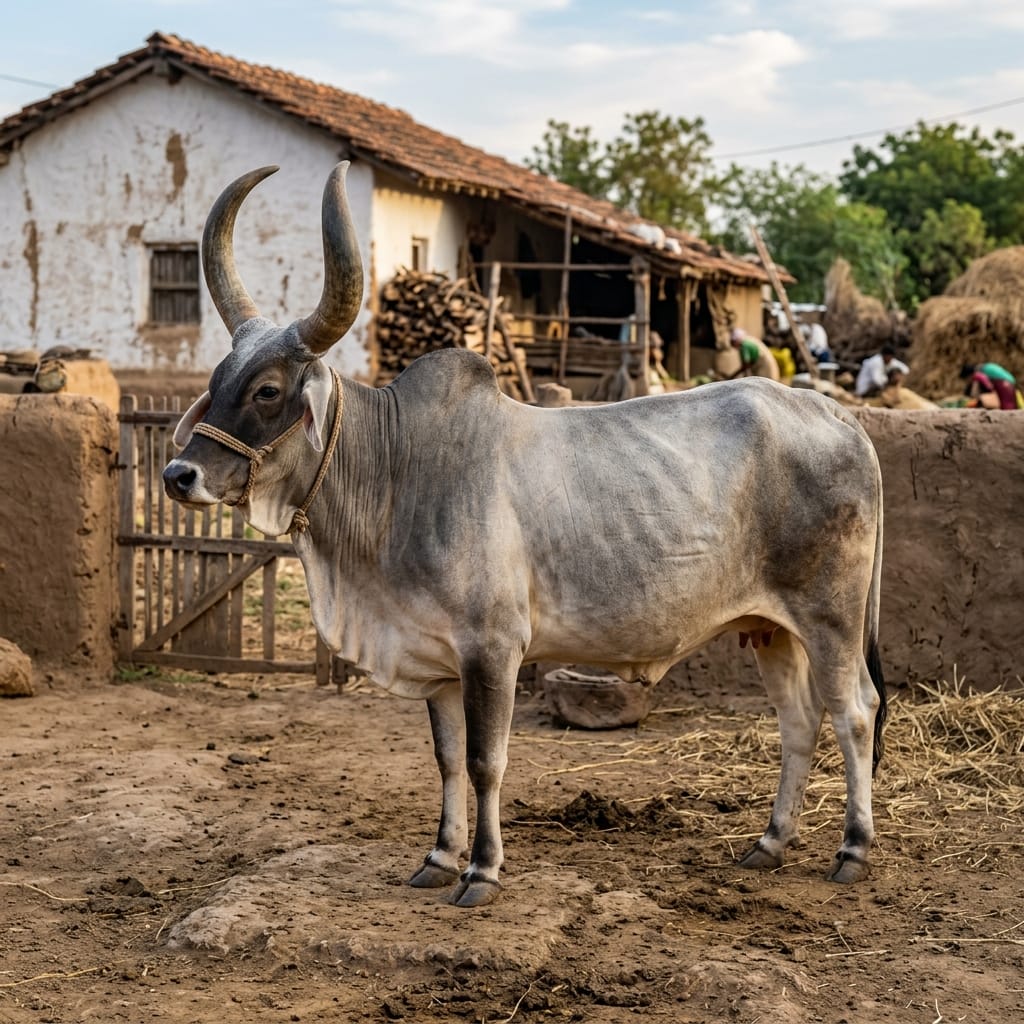
Kankrej गाय
કાંકરેજ
अन्य नाम: Wagad, Wadhiar, Talabda, Nagar
गुजरात के बंजर भूमि की लंबे-कद वाली दूध-कर्षण नस्ल।
मूल क्षेत्र: कच्छ, बनासकांठा, मेहसाणा, पाटन; राजस्थान के बाड़मेर और जोधपुर तक
Photo: Wikimedia Commons contributors · CC BY-SA
प्रतिदिन दूध (अधिकतम)
6–10 L
प्रति ब्यांत दूध (~300 दिन)
1,300–2,800 L
दूध वसा
4.0–4.8%
वयस्क वज़न
400–500 kg
विशिष्ट विशेषताएँ
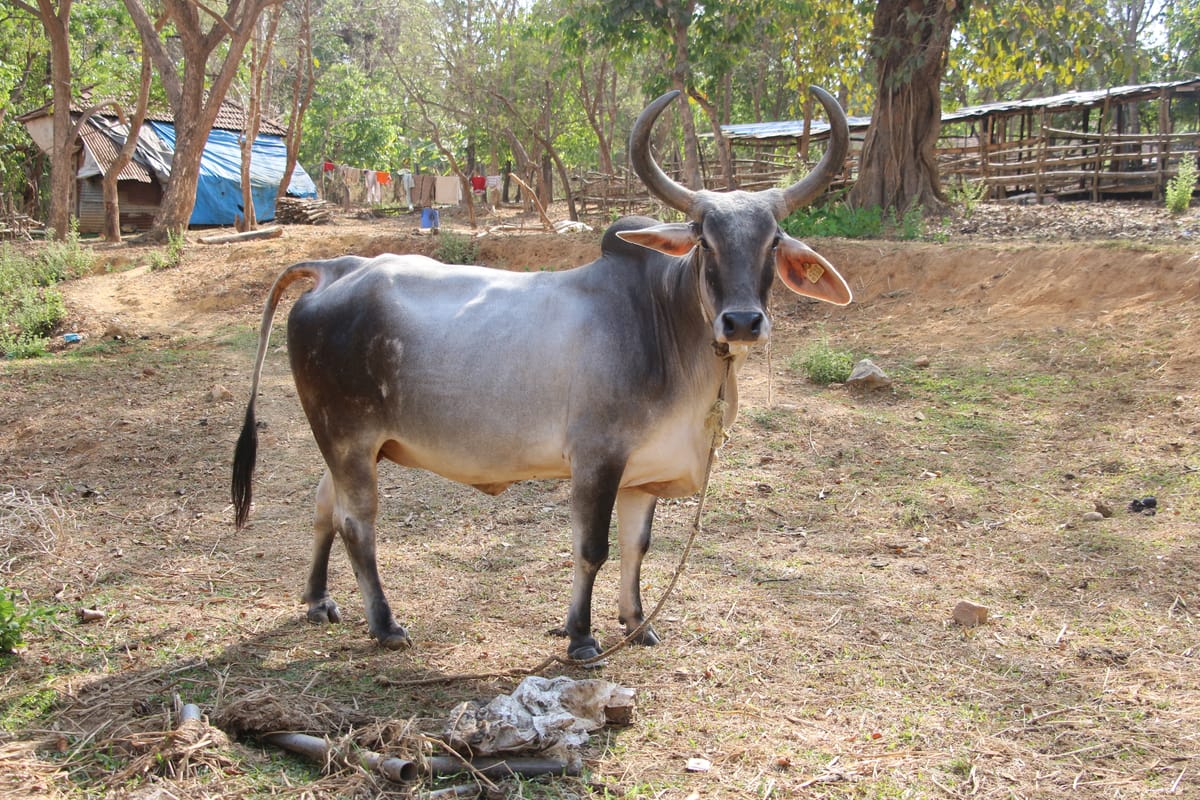
रोम/त्वचा: चांदी-धूसर से लोहे-धूसर; नर गायों से अधिक गहरे।
- शक्तिशाली, अच्छी तरह से मांसपेशीय शरीर — स्वदेशी भारतीय दोहरे-उद्देश्य नस्लों में सबसे बड़ी
- त्वचा से आधे तक ढके लीयर-आकार के सींग
- मज़बूत रूप से विकसित कूबड़
- स्थिर, ज़मीन-कवरिंग चाल (सवाई-चाल) — गति से लंबी दूरी तय करने के लिए जानी जाती है
स्वभाव और उपयोगिता
- प्रमुख कर्षण नस्ल — बैल भारी गाड़ियों को निरंतर चाल पर खींचते हैं
- दोहरे-उद्देश्य प्रजनन के बावजूद गायें सम्मानजनक दूध देती हैं
- गर्मी और सूखा सहनशील
- लंबा उत्पादक जीवन — 12+ स्तनपान असामान्य नहीं
इतिहास और वंशावली
कांकरेज का नाम बनासकांठा के कांकरेज तालुका से लिया गया है। यह नस्ल ऐतिहासिक रूप से गुजरात और राजस्थान के व्यापारिक कारवाँ का केंद्र थी — कांकरेज बैल गाड़ियाँ कपास, नमक और अनाज को 8–10 किमी/घंटे की रफ़्तार से ले जाती थीं। मशीनीकरण के साथ, कर्षण बाज़ार ढह गया; आज कांकरेज मुख्यतः गौशालाओं और गुजरात पशुपालन विभाग द्वारा बनाए रखी जाने वाली दोहरे-उद्देश्य नस्ल के रूप में जीवित है।
Kankrej क्यों महत्वपूर्ण है
कांकरेज एक दोहरे-उद्देश्य वाली नस्ल है — एक खेती में काम करने वाली कांकरेज गाय अनिवार्य रूप से एक खेत पर दो आय धाराओं की पेशकश करती है। शुष्क गुजरात/राजस्थान के लिए सहनशीलता और कठोरता इसे शीर्ष पसंद बनाती है।
Kankrej cow price in India
Typical milking cow
₹50,000 – 1,10,000
Healthy, regular yield
Elite / registered lines
₹1,80,000 – 5,00,000
High yield, pedigreed
Kankrej is a dual-purpose breed — bullocks command serious premiums in north Gujarat and Rajasthan farming circuits. A good Kankrej bullock pair can cost more than a milking cow.
Monthly maintenance cost
Feed
₹4,000 – 6,000
Vet + vax
₹400 – 900
Approx. total
₹5,000 – 7,500
Kankrej is a large-framed breed (450–550 kg) so feed cost runs higher than Gir or Red Sindhi. Field grazing in the Banaskantha-Kachchh belt offsets this for traditional owners.
A2 milk
Is Kankrej cow milk A2?
Yes. Kankrej produces A2 beta-casein milk by genetics — like all pure indigenous Indian (Bos indicus) breeds.
- A2 milk with 4.5–5.0% fat — typical zebu profile.
- Strong draught capability means a working Kankrej cow on a farm is essentially two income streams in one.
- Disease and drought tolerance make it a top pick for arid Gujarat / Rajasthan.
- Milk yield is lower than Gir/Sahiwal but bullock value compensates economically.
How to verify
Visual cues: silver-grey to iron-grey coat, distinctive lyre-shaped horns rising upward from a broad forehead, large dewlap. Pure Kankrej has a confident, alert gait — the breed was traditionally used by the Banni nomads to pull heavy carts across desert sand.
Kankrej vaccination schedule
Standard DAHD / ICAR schedule for indigenous Indian dairy cattle. Always confirm timing with your local vet.
| First dose | Vaccine | Cadence |
|---|---|---|
Compare Breeds
Select any two indigenous breeds to compare side-by-side.
| Feature | Kankrej | Gir |
|---|---|---|
| Origin | Gujarat | Gujarat |
| Daily Milk Yield | 6–10 L | 8–12 L |
| Lactation Yield | 1,300–2,800 L | 1,800–3,500 L |
| Milk Fat % | 4.0–4.8% | 4.5–5.0% |
| Adult Weight | 400–500 kg | 380–475 kg |
| Status | Vulnerable | Stable |
| Coat Color | चांदी-धूसर से लोहे-धूसर; नर गायों से अधिक गहरे। | चमकदार लाल या लाल-सफ़ेद धब्बेदार; कभी-कभी शुद्ध सफ़ेद। लालिमायुक्त-पीला मुख। |
| Milking Price | ₹50,000 – 1,10,000 | ₹50,000 – 1,20,000 |
| Maintenance | ₹5,000 – 7,500/mo | ₹4,500 – 7,000/mo |