Loading Go-LX...
View Full Image
Endangered Karnataka A2 milk
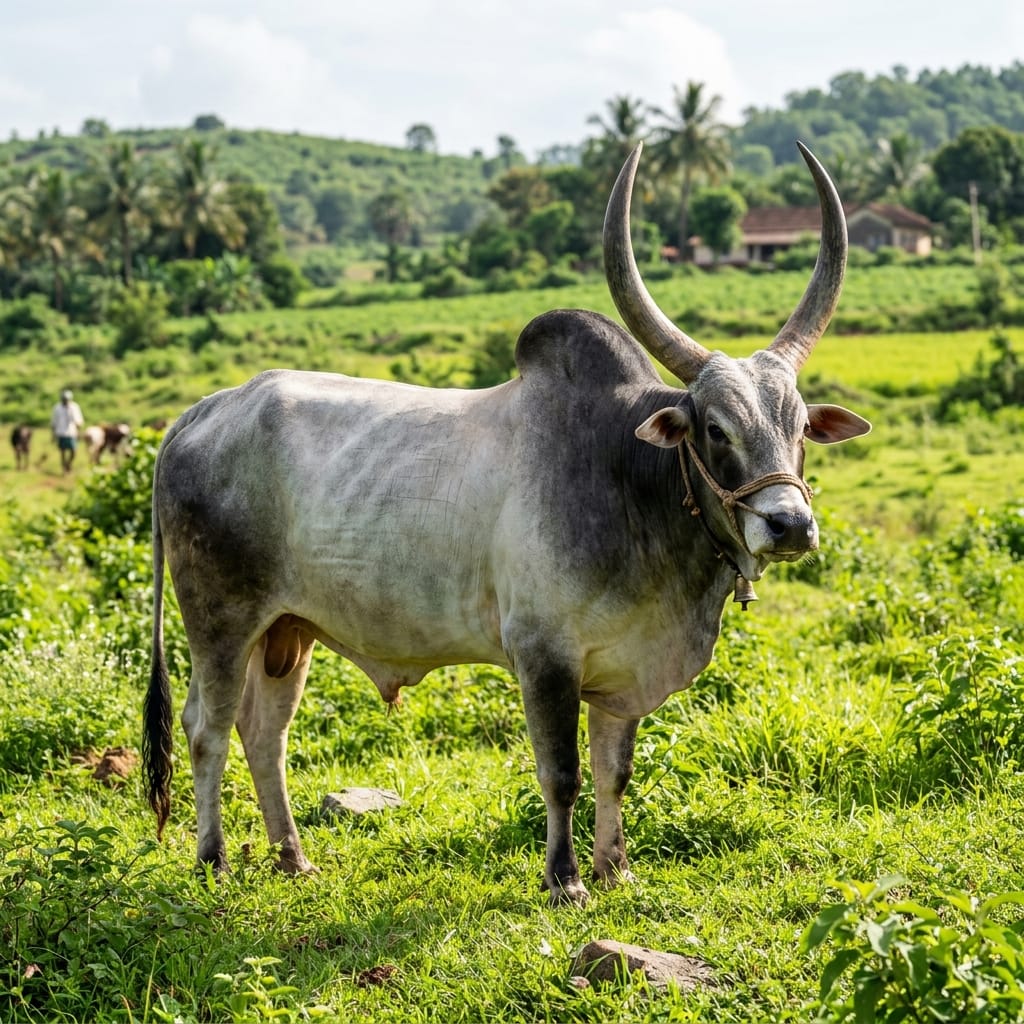
Amrit Mahal Cow
ಅಮೃತ್ ಮಹಲ್
The royal cattle of the Wodeyars — bred for war and milk.
Native tract: Chikkamagaluru, Chitradurga, Hassan, Tumakuru
Photo: Wikimedia Commons contributors · CC BY-SA
Milk per day (peak)
2–4 L
Milk per lactation (~300 days)
500–1,200 L
Adult weight
300–425 kg
Amrit Mahal is endangered
Every Amrit Mahal cow saved is a meaningful step in protecting this heritage line. Consider adopting one or supporting a verified gaushala in Karnataka.
Distinctive features
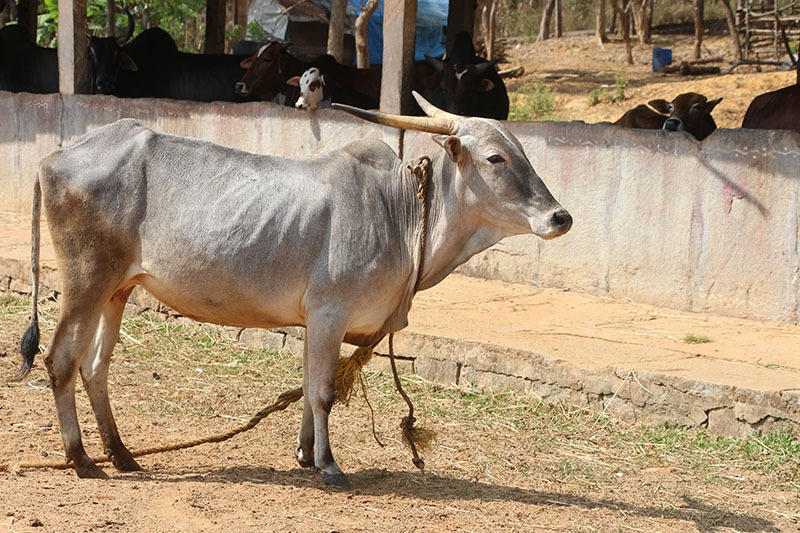
Coat: Grey with darker shades on the face, neck, hump, and quarters.
- Athletic, compact build
- Long, sharply pointed horns sweeping back and curving outward
- Small, alert eyes; flat forehead
- Tight skin, minimal dewlap
Temperament & utility
- Originally bred by the Wodeyars to pull artillery and supply carts
- Extreme endurance and speed
- Modest milker
- Long-lived — 18–20 years
History & lineage
Amrit Mahal ("milk hall") was established by Chikka Devaraja Wodeyar of Mysore in the 17th century — Hyder Ali and Tipu Sultan later expanded the programme to supply bullocks for the Mysore army. After 1799 the British East India Company maintained the Amrit Mahal Kavals (grazing reserves), several of which are still recognised today. The breed has shrunk dramatically; Karnataka maintains conservation herds at Ajjampur and Lingadahalli.
Why Amrit Mahal matters
Amrit Mahal is endangered — every cow saved makes a measurable difference. The breed also has a story most Indians don't know: the cattle that helped Tipu Sultan move his army against the British 240 years ago.
Amrit Mahal cow price in India
Typical milking cow
₹40,000 – 90,000
Healthy, regular yield
Elite / registered lines
₹1,50,000 – 3,00,000
High yield, pedigreed
Prices depend heavily on lactation stage, milk yield, and breed purity. Elite lines with verified pedigrees fetch premium rates.
Monthly maintenance cost
Feed
₹3,000 – 4,500
Vet + vax
₹300 – 600
Approx. total
₹3,800 – 5,500
Indigenous zebu breeds are extremely hardy with natural resistance to tropical diseases and ticks, keeping vet bills to a minimum. Feed cost can be reduced with open grazing access.
A2 milk
Is Amrit Mahal cow milk A2?
Yes. Amrit Mahal produces A2 beta-casein milk by genetics — like all pure indigenous Indian (Bos indicus) breeds.
- Naturally easier to digest for people sensitive to A1 milk
- High in A2 beta-casein protein, free from BCM-7 peptide
- Associated with traditional wellness and higher fat content in native milk
How to verify
Always buy from verified breeders, check the physical traits (prominent hump, dewlap, convex forehead), or request a DNA test report from a certified lab.
Amrit Mahal vaccination schedule
Standard DAHD / ICAR schedule for indigenous Indian dairy cattle. Always confirm timing with your local vet.
| First dose | Vaccine | Cadence |
|---|---|---|
| 4 months onwards | FMD (Foot & Mouth Disease) | Every 6 months |
| 6 months onwards |
Compare Breeds
Select any two indigenous breeds to compare side-by-side.
| Feature | Amrit Mahal | Gir |
|---|---|---|
| Origin | Karnataka | Gujarat |
| Daily Milk Yield | 2–4 L | 8–12 L |
| Lactation Yield | 500–1,200 L | 1,800–3,500 L |
| Milk Fat % | — | 4.5–5.0% |
| Adult Weight | 300–425 kg | 380–475 kg |
| Status | Endangered | Stable |
| Coat Color | Grey with darker shades on the face, neck, hump, and quarters. | Glossy red or red-and-white pied; sometimes pure white. Reddish-yellow muzzle. |
| Milking Price | ₹40,000 – 90,000 | ₹50,000 – 1,20,000 |
| Maintenance | ₹3,800 – 5,500/mo | ₹4,500 – 7,000/mo |