Loading Go-LX...
View Full Image
Stable Andhra Pradesh A2 milk
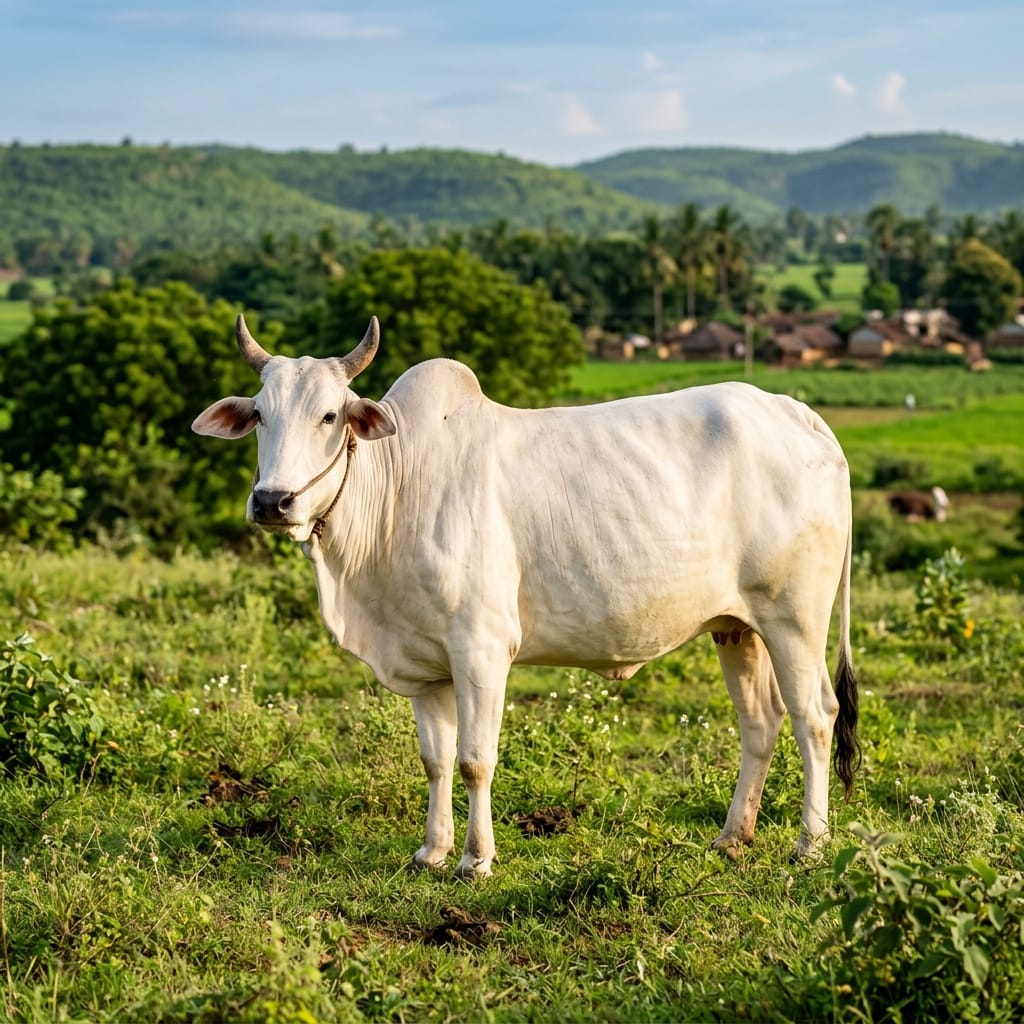
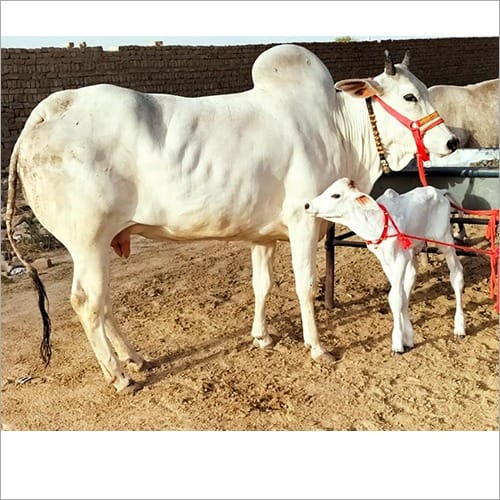
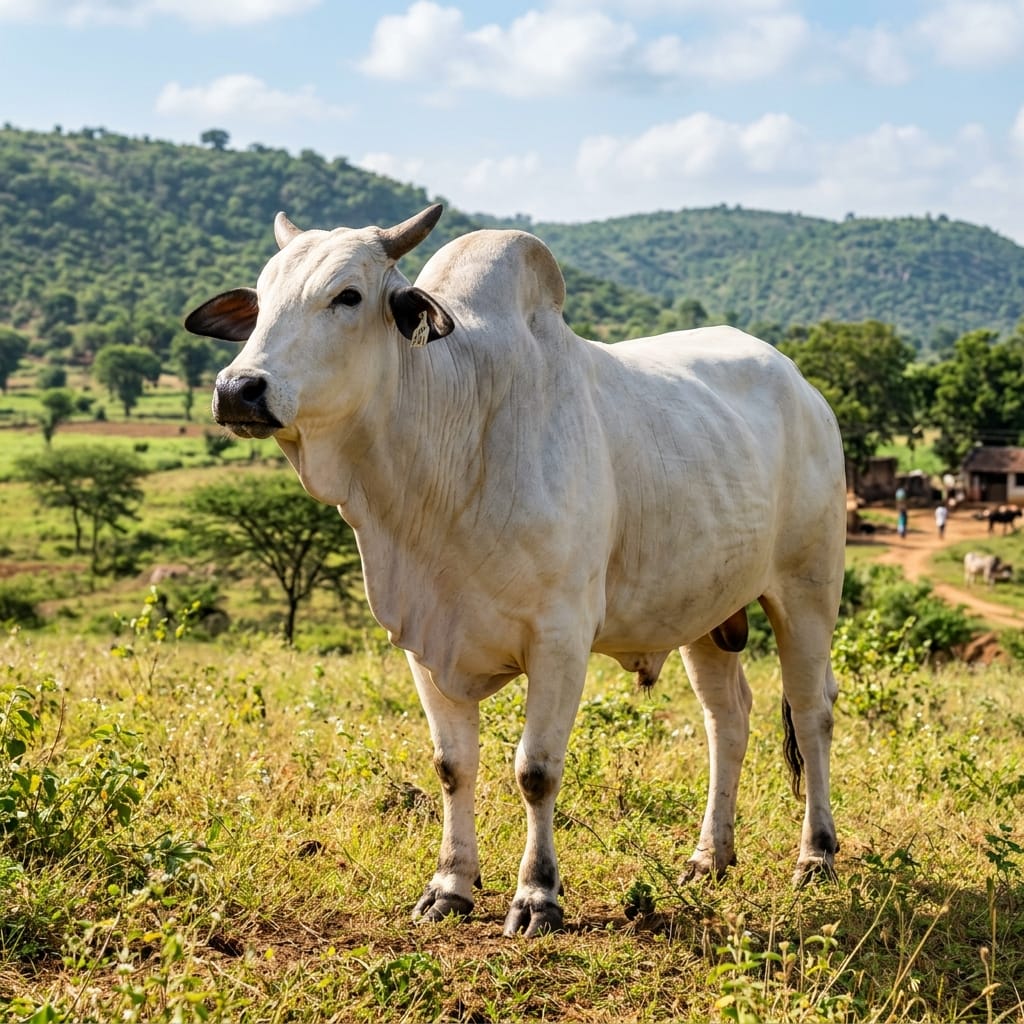
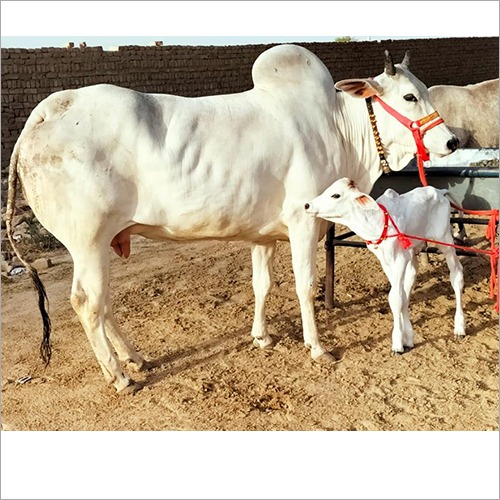
Ongole Cow
ఒంగోలు
Also called: Nellore (in Brazil)
The breed Brazil built its beef industry on.
Native tract: Prakasam, Nellore, Guntur
Photo: Wikimedia Commons contributors · CC BY-SA
Milk per day (peak)
4–7 L
Milk per lactation (~300 days)
1,000–1,800 L
Milk fat
4.5–5.0%
Adult weight
430–550 kg
Distinctive features
Coat: White or light grey; black points (knees, neck, shoulder).
- Large, well-muscled body — among the heaviest indigenous Indian breeds
- Short stumpy horns
- Massive hump and dewlap in males
- Long, swinging tail with black switch
Temperament & utility
- Premier draught and beef-type indigenous breed
- Modest milker; cows give 4–7 litres a day
- Disease resistant, particularly to foot-and-mouth
- Long productive life
History & lineage
Ongole was exported to Brazil in the late 1800s, where it became "Nelore" and now numbers 200 million animals — the foundation of Brazilian beef. In India, the breed declined after independence as draught demand fell. Andhra Pradesh's Livestock Research Station at Lam, Guntur, maintains a nucleus herd. An elite Ongole bull can fetch ₹50 lakh+ from Brazilian buyers.
Why Ongole matters
Ongole reminds us that India's cow genetics built modern tropical livestock economies abroad — while we let the home herd shrink. Strengthening Ongole herds is both heritage protection and an export opportunity.
Ongole cow price in India
Typical milking cow
₹40,000 – 90,000
Healthy, regular yield
Elite / registered lines
₹1,50,000 – 3,00,000
High yield, pedigreed
Prices depend heavily on lactation stage, milk yield, and breed purity. Elite lines with verified pedigrees fetch premium rates.
Monthly maintenance cost
Feed
₹3,000 – 4,500
Vet + vax
₹300 – 600
Approx. total
₹3,800 – 5,500
Indigenous zebu breeds are extremely hardy with natural resistance to tropical diseases and ticks, keeping vet bills to a minimum. Feed cost can be reduced with open grazing access.
A2 milk
Is Ongole cow milk A2?
Yes. Ongole produces A2 beta-casein milk by genetics — like all pure indigenous Indian (Bos indicus) breeds.
- Naturally easier to digest for people sensitive to A1 milk
- High in A2 beta-casein protein, free from BCM-7 peptide
- Associated with traditional wellness and higher fat content in native milk
How to verify
Always buy from verified breeders, check the physical traits (prominent hump, dewlap, convex forehead), or request a DNA test report from a certified lab.
Ongole vaccination schedule
Standard DAHD / ICAR schedule for indigenous Indian dairy cattle. Always confirm timing with your local vet.
| First dose | Vaccine | Cadence |
|---|---|---|
| 4 months onwards | FMD (Foot & Mouth Disease) | Every 6 months |
| 6 months onwards |
Compare Breeds
Select any two indigenous breeds to compare side-by-side.
| Feature | Ongole | Gir |
|---|---|---|
| Origin | Andhra Pradesh | Gujarat |
| Daily Milk Yield | 4–7 L | 8–12 L |
| Lactation Yield | 1,000–1,800 L | 1,800–3,500 L |
| Milk Fat % | 4.5–5.0% | 4.5–5.0% |
| Adult Weight | 430–550 kg | 380–475 kg |
| Status | Stable | Stable |
| Coat Color | White or light grey; black points (knees, neck, shoulder). | Glossy red or red-and-white pied; sometimes pure white. Reddish-yellow muzzle. |
| Milking Price | ₹40,000 – 90,000 | ₹50,000 – 1,20,000 |
| Maintenance | ₹3,800 – 5,500/mo | ₹4,500 – 7,000/mo |