Loading Go-LX...
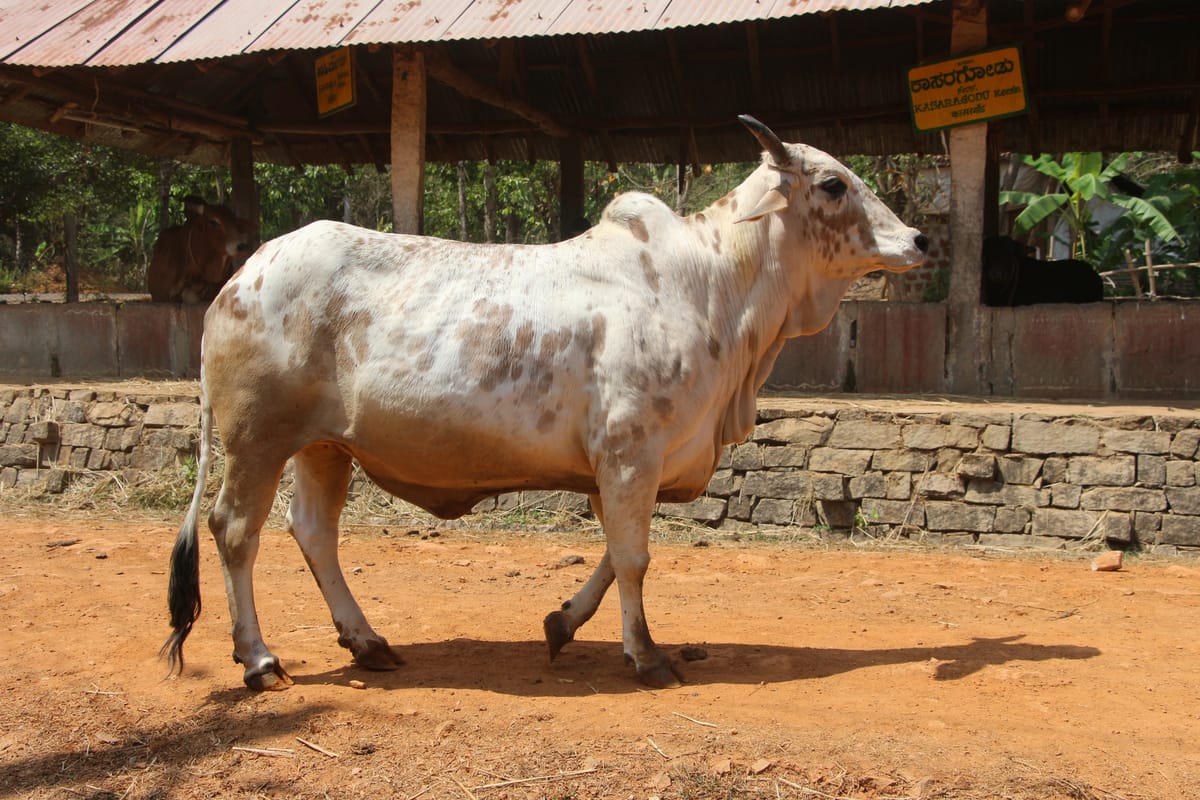
View Full Image
Stable Rajasthan A2 milk
Rathi Cow
राठी
The desert dairy cow of Bikaner.
Native tract: Bikaner, Ganganagar, Hanumangarh
Photo: Wikimedia Commons contributors · CC BY-SA
Milk per day (peak)
8–12 L
Milk per lactation (~300 days)
1,500–3,000 L
Milk fat
4.0–4.8%
Adult weight
300–400 kg
Distinctive features
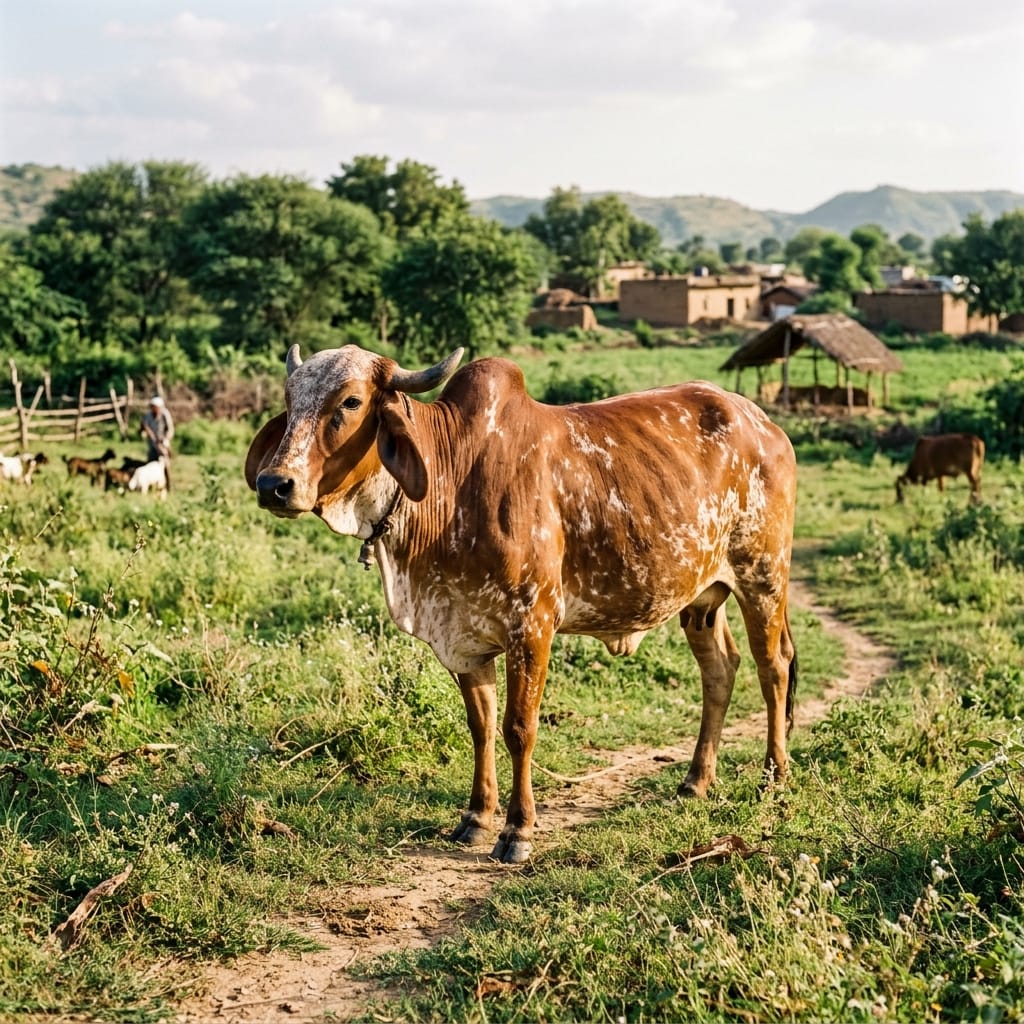
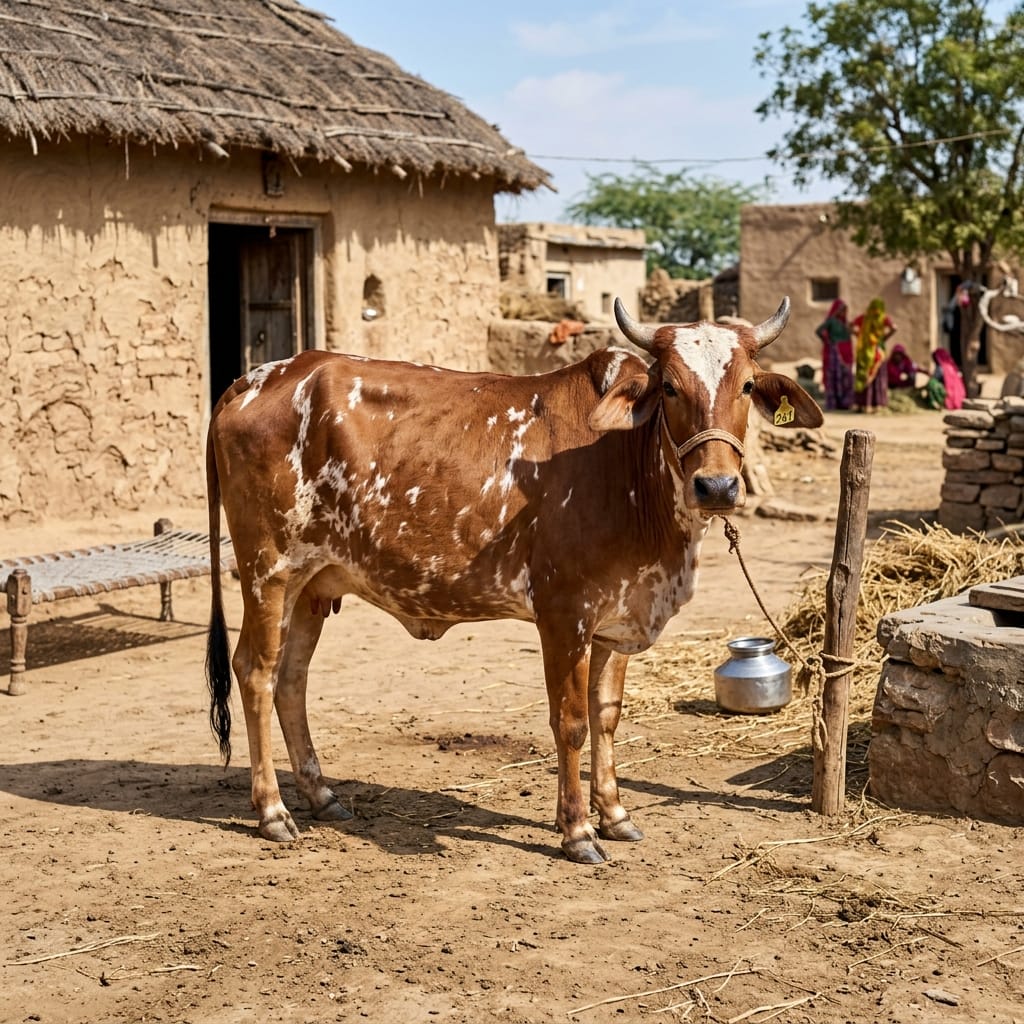
Coat: Brown with white patches; some animals are nearly all-brown or all-white.
- Medium-sized, compact body
- Lyre-shaped horns
- Well-developed hump and dewlap
- Black muzzle and eyelashes
Temperament & utility
- Excellent milk yield for an arid-zone breed
- High heat and drought tolerance
- Adapts to scarce fodder
- A2 milk, high fat
History & lineage
Rathi was developed by the Raths, a pastoral community of Bikaner, by selectively crossing Sahiwal, Red Sindhi, Tharparkar, and Dhanni cattle over generations. The result is a small but productive desert dairy cow that has become the backbone of the Bikaner milk economy. Rajasthan Livestock Development Board maintains nucleus herds at Nohar.
Why Rathi matters
Rathi shows that careful, community-led breeding can produce a cow as productive as Sahiwal but adapted to half the rainfall. It is a model for what climate-adaptive Indian dairy looks like.
Rathi cow price in India
Typical milking cow
₹40,000 – 90,000
Healthy, regular yield
Elite / registered lines
₹1,50,000 – 3,00,000
High yield, pedigreed
Prices depend heavily on lactation stage, milk yield, and breed purity. Elite lines with verified pedigrees fetch premium rates.
Monthly maintenance cost
Feed
₹3,000 – 4,500
Vet + vax
₹300 – 600
Approx. total
₹3,800 – 5,500
Indigenous zebu breeds are extremely hardy with natural resistance to tropical diseases and ticks, keeping vet bills to a minimum. Feed cost can be reduced with open grazing access.
A2 milk
Is Rathi cow milk A2?
Yes. Rathi produces A2 beta-casein milk by genetics — like all pure indigenous Indian (Bos indicus) breeds.
- Naturally easier to digest for people sensitive to A1 milk
- High in A2 beta-casein protein, free from BCM-7 peptide
- Associated with traditional wellness and higher fat content in native milk
How to verify
Always buy from verified breeders, check the physical traits (prominent hump, dewlap, convex forehead), or request a DNA test report from a certified lab.
Rathi vaccination schedule
Standard DAHD / ICAR schedule for indigenous Indian dairy cattle. Always confirm timing with your local vet.
| First dose | Vaccine | Cadence |
|---|---|---|
| 4 months onwards | FMD (Foot & Mouth Disease) | Every 6 months |
| 6 months onwards |
Compare Breeds
Select any two indigenous breeds to compare side-by-side.
| Feature | Rathi | Gir |
|---|---|---|
| Origin | Rajasthan | Gujarat |
| Daily Milk Yield | 8–12 L | 8–12 L |
| Lactation Yield | 1,500–3,000 L | 1,800–3,500 L |
| Milk Fat % | 4.0–4.8% | 4.5–5.0% |
| Adult Weight | 300–400 kg | 380–475 kg |
| Status | Stable | Stable |
| Coat Color | Brown with white patches; some animals are nearly all-brown or all-white. | Glossy red or red-and-white pied; sometimes pure white. Reddish-yellow muzzle. |
| Milking Price | ₹40,000 – 90,000 | ₹50,000 – 1,20,000 |
| Maintenance | ₹3,800 – 5,500/mo | ₹4,500 – 7,000/mo |