Loading Go-LX...
View Full Image
Vulnerable Gujarat A2 milk
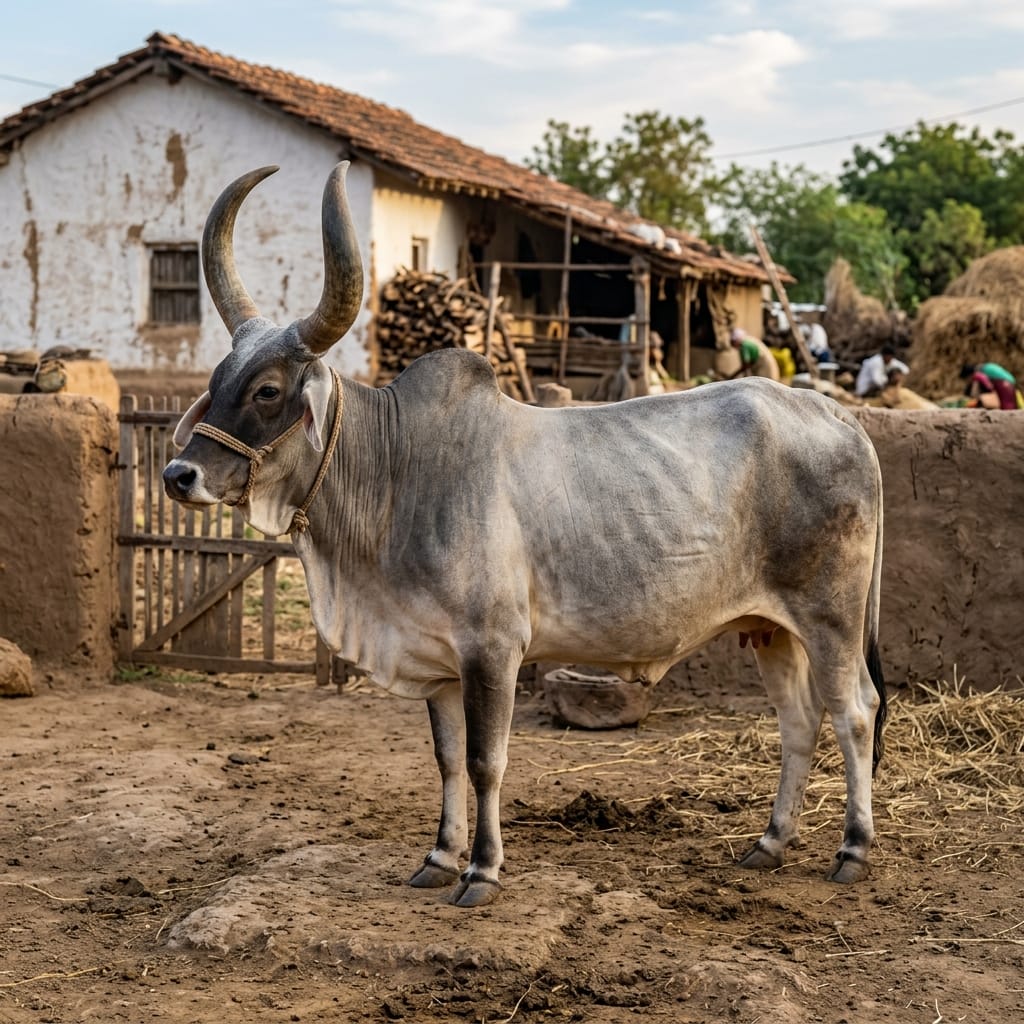
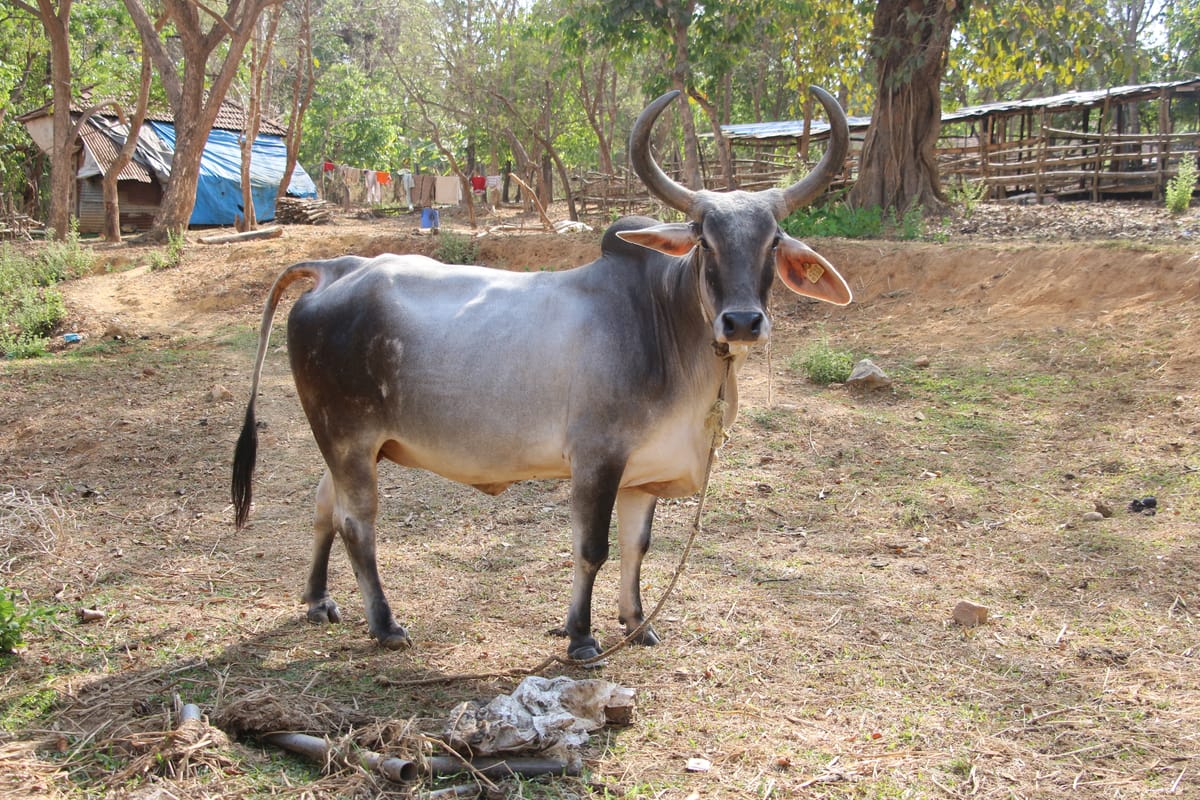
Kankrej Cow
કાંકરેજ
Also called: Wagad, Wadhiar, Talabda, Nagar
The fastest-trotting draught breed — and a respectable milker.
Native tract: Kachchh, Banaskantha, Mehsana, Patan; spilling into Rajasthan's Barmer and Jodhpur
Photo: Wikimedia Commons contributors · CC BY-SA
Milk per day (peak)
6–10 L
Milk per lactation (~300 days)
1,300–2,800 L
Milk fat
4.0–4.8%
Adult weight
400–500 kg
Distinctive features
Coat: Silver-grey to iron-grey; bulls darker than cows.
- Powerful, well-muscled body — the largest of the indigenous Indian dual-purpose breeds
- Lyre-shaped horns covered with skin partway up
- Strongly developed hump
- Steady, ground-covering trot (sawai-chal) — known to cover long distances at speed
Temperament & utility
- Premier draught breed — bullocks pull heavy carts at sustained trotting pace
- Cows give respectable milk despite the dual-purpose breeding
- Heat and drought hardy
- Long productive life — 12+ lactations not unusual
History & lineage
Kankrej takes its name from the Kankrej taluka of Banaskantha. The breed was historically central to the merchant caravans of Gujarat and Rajasthan — Kankrej bullock carts moved cotton, salt, and grain at 8–10 km/h, faster than any other Indian draught bullock. With mechanisation, the draught market collapsed; today Kankrej survives mainly as a dual-purpose breed maintained by gaushalas and the Gujarat Animal Husbandry Department.
Why Kankrej matters
Kankrej is at the crossroads of two crises — declining demand for draught animals and competition from crossbred dairy. Adopting a Kankrej cow into a working farm or gaushala keeps both her genetic line and a piece of Gujarat's caravan history alive.
Kankrej cow price in India
Typical milking cow
₹50,000 – 1,10,000
Healthy, regular yield
Elite / registered lines
₹1,80,000 – 5,00,000
High yield, pedigreed
Kankrej is a dual-purpose breed — bullocks command serious premiums in north Gujarat and Rajasthan farming circuits. A good Kankrej bullock pair can cost more than a milking cow.
Monthly maintenance cost
Feed
₹4,000 – 6,000
Vet + vax
₹400 – 900
Approx. total
₹5,000 – 7,500
Kankrej is a large-framed breed (450–550 kg) so feed cost runs higher than Gir or Red Sindhi. Field grazing in the Banaskantha-Kachchh belt offsets this for traditional owners.
A2 milk
Is Kankrej cow milk A2?
Yes. Kankrej produces A2 beta-casein milk by genetics — like all pure indigenous Indian (Bos indicus) breeds.
- A2 milk with 4.5–5.0% fat — typical zebu profile.
- Strong draught capability means a working Kankrej cow on a farm is essentially two income streams in one.
- Disease and drought tolerance make it a top pick for arid Gujarat / Rajasthan.
- Milk yield is lower than Gir/Sahiwal but bullock value compensates economically.
How to verify
Visual cues: silver-grey to iron-grey coat, distinctive lyre-shaped horns rising upward from a broad forehead, large dewlap. Pure Kankrej has a confident, alert gait — the breed was traditionally used by the Banni nomads to pull heavy carts across desert sand.
Kankrej vaccination schedule
Standard DAHD / ICAR schedule for indigenous Indian dairy cattle. Always confirm timing with your local vet.
| First dose | Vaccine | Cadence |
|---|---|---|
Compare Breeds
Select any two indigenous breeds to compare side-by-side.
| Feature | Kankrej | Gir |
|---|---|---|
| Origin | Gujarat | Gujarat |
| Daily Milk Yield | 6–10 L | 8–12 L |
| Lactation Yield | 1,300–2,800 L | 1,800–3,500 L |
| Milk Fat % | 4.0–4.8% | 4.5–5.0% |
| Adult Weight | 400–500 kg | 380–475 kg |
| Status | Vulnerable | Stable |
| Coat Color | Silver-grey to iron-grey; bulls darker than cows. | Glossy red or red-and-white pied; sometimes pure white. Reddish-yellow muzzle. |
| Milking Price | ₹50,000 – 1,10,000 | ₹50,000 – 1,20,000 |
| Maintenance | ₹5,000 – 7,500/mo | ₹4,500 – 7,000/mo |