Loading Go-LX...
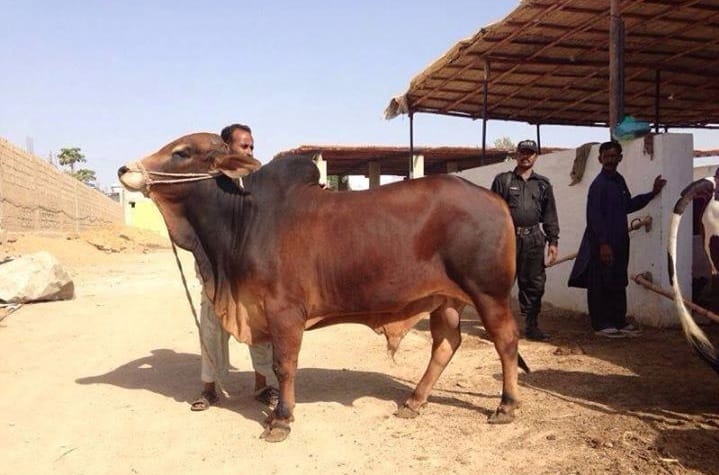
View Full Image
Stable Sindh A2 milk
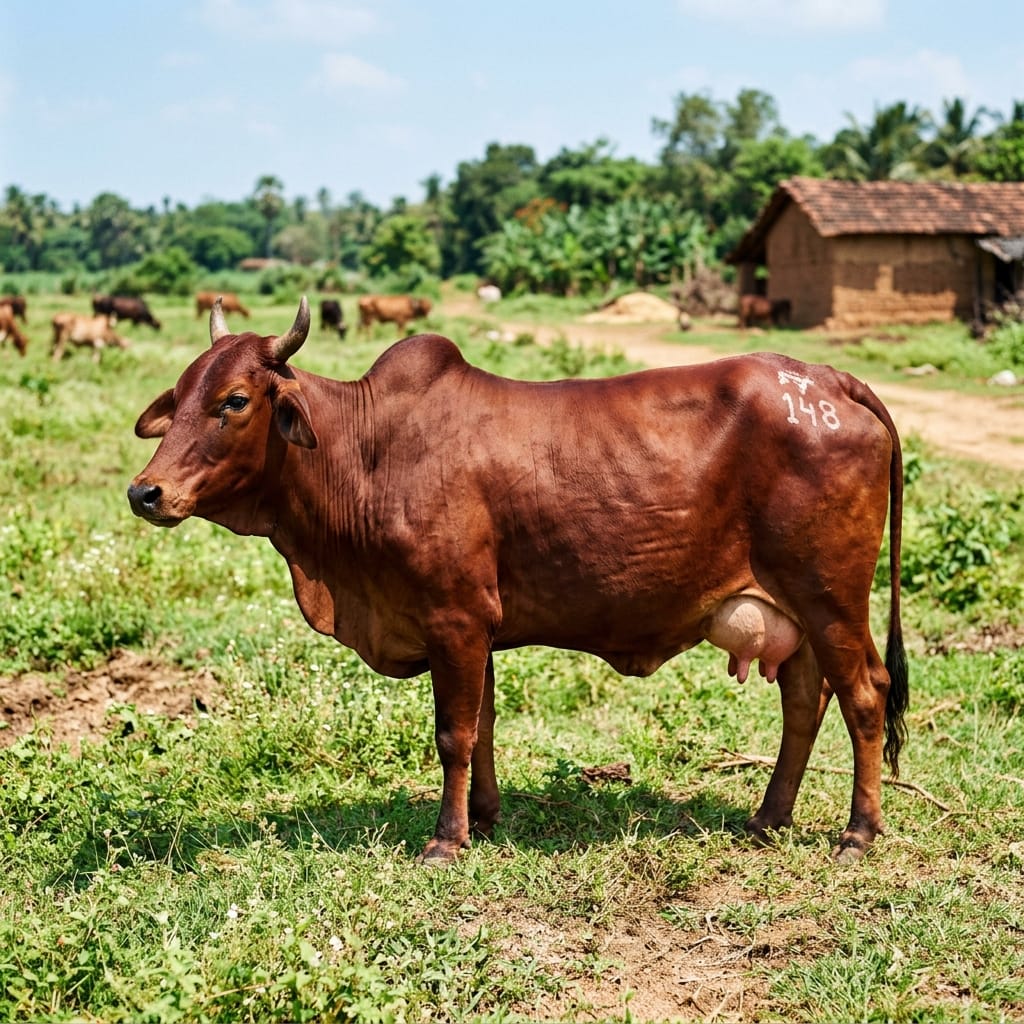
Red Sindhi Cow
रेड सिंधी
Also called: Sindhi, Red Karachi, Mahi
Compact, hardy, and exported to a dozen tropical nations.
Native tract: Sindh province (Pakistan); maintained in Indian Punjab, Haryana, Karnataka, TN, Kerala
Photo: Wikimedia Commons contributors · CC BY-SA
Milk per day (peak)
8–12 L
Milk per lactation (~300 days)
1,800–3,500 L
Milk fat
4.5–5.2%
Adult weight
300–400 kg
Distinctive features
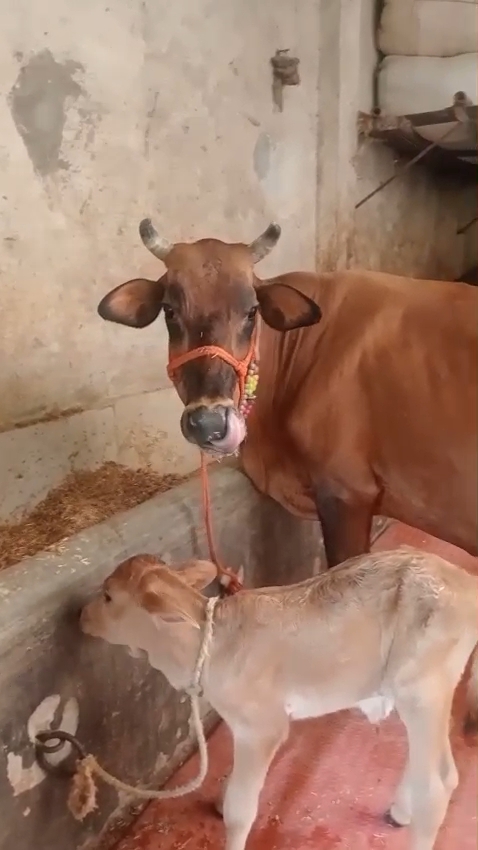
Coat: Deep red to dark brown; bulls darker than cows.
- Small, compact body — lower feed requirement per litre
- Short, thick horns emerging laterally then curving up
- Pronounced dewlap and prepuce
- Black hooves and tail switch
Temperament & utility
- Heat tolerance among the highest of any zebu breed
- Adapts to humid tropical climates that destroy European breeds
- A2 milk with high solids-not-fat content
- Exceptional reproductive efficiency — calves every 12–14 months
History & lineage
Red Sindhi was developed by the cattle keepers of Sindh as a smaller, more economical milker than Sahiwal. The breed has travelled further than any other Indian cow — it forms the base of dairy herds in the Philippines, Sri Lanka, Brazil, and several African nations. NDRI Karnal's elite Red Sindhi herd is among the most productive in India.
Why Red Sindhi matters
Red Sindhi is the answer for small and marginal farmers — half the feed of a Sahiwal, two-thirds the milk, four times the heat tolerance of an HF. For a smallholder with 1 acre of land, Red Sindhi is the most economically rational dairy choice in India.
Red Sindhi cow price in India
Typical milking cow
₹40,000 – 90,000
Healthy, regular yield
Elite / registered lines
₹1,50,000 – 4,00,000
High yield, pedigreed
Red Sindhi is the most affordable of the major dairy zebus — pure stock comes mostly from Karnataka and Tamil Nadu now that the original Sindhi tract is in Pakistan. Reasonable prices reflect supply, not quality.
Monthly maintenance cost
Feed
₹3,000 – 4,800
Vet + vax
₹400 – 800
Approx. total
₹4,000 – 6,000
Compact body and efficient feed conversion make Red Sindhi a value pick. Suits smallholder dairies — one cow can be maintained on backyard fodder + tree-leaf supplementation in much of peninsular India.
A2 milk
Is Red Sindhi cow milk A2?
Yes. Red Sindhi produces A2 beta-casein milk by genetics — like all pure indigenous Indian (Bos indicus) breeds.
- A2 milk with 4.5% fat — same biological profile as the more famous Gir / Sahiwal.
- Higher heat tolerance than any temperate breed — productive even at 45°C.
- Strong calf survival rate makes Red Sindhi a low-risk first dairy cow for new farmers.
- Forms the genetic base of many cross-breeding programs in tropical Asia and Africa.
How to verify
Red Sindhi is pure Bos indicus → A2 by genetics. Check for the deep red coat (often with darker shading on the shoulders and rear), short stumpy horns and compact, well-balanced frame. Photographs alone aren't enough — see the cow in person before paying.
Red Sindhi vaccination schedule
Standard DAHD / ICAR schedule for indigenous Indian dairy cattle. Always confirm timing with your local vet.
| First dose | Vaccine | Cadence |
|---|
Compare Breeds
Select any two indigenous breeds to compare side-by-side.
| Feature | Red Sindhi | Gir |
|---|---|---|
| Origin | Sindh | Gujarat |
| Daily Milk Yield | 8–12 L | 8–12 L |
| Lactation Yield | 1,800–3,500 L | 1,800–3,500 L |
| Milk Fat % | 4.5–5.2% | 4.5–5.0% |
| Adult Weight | 300–400 kg | 380–475 kg |
| Status | Stable | Stable |
| Coat Color | Deep red to dark brown; bulls darker than cows. | Glossy red or red-and-white pied; sometimes pure white. Reddish-yellow muzzle. |
| Milking Price | ₹40,000 – 90,000 | ₹50,000 – 1,20,000 |
| Maintenance | ₹4,000 – 6,000/mo | ₹4,500 – 7,000/mo |